
Gothic Makeup Can Be Subtle
For beginners, gothic makeup can feel more intimidating than it needs to.
Search for inspiration, and you will find everything from barely-there smoky liner to theatrical white bases, razor-sharp brows, exaggerated contour, black lipstick, and elaborate graphic eyes.
All of those can belong somewhere within gothic beauty.
None of them are mandatory.
The easiest way to approach gothic makeup is not to ask how dark you can make the look. Ask where you want the darkness to sit.
It might be in a smudged charcoal eye. A deep wine lip. Matte skin with cool-toned contour. A thin line of black eyeliner. Or simply a color palette that feels moodier than your everyday makeup.
For beginners, restraint usually creates a stronger result than trying to use every gothic beauty reference at once.
If you’re building the look as part of a broader dark wardrobe, explore more gothic fashion ideas in our Dark Fashion section.
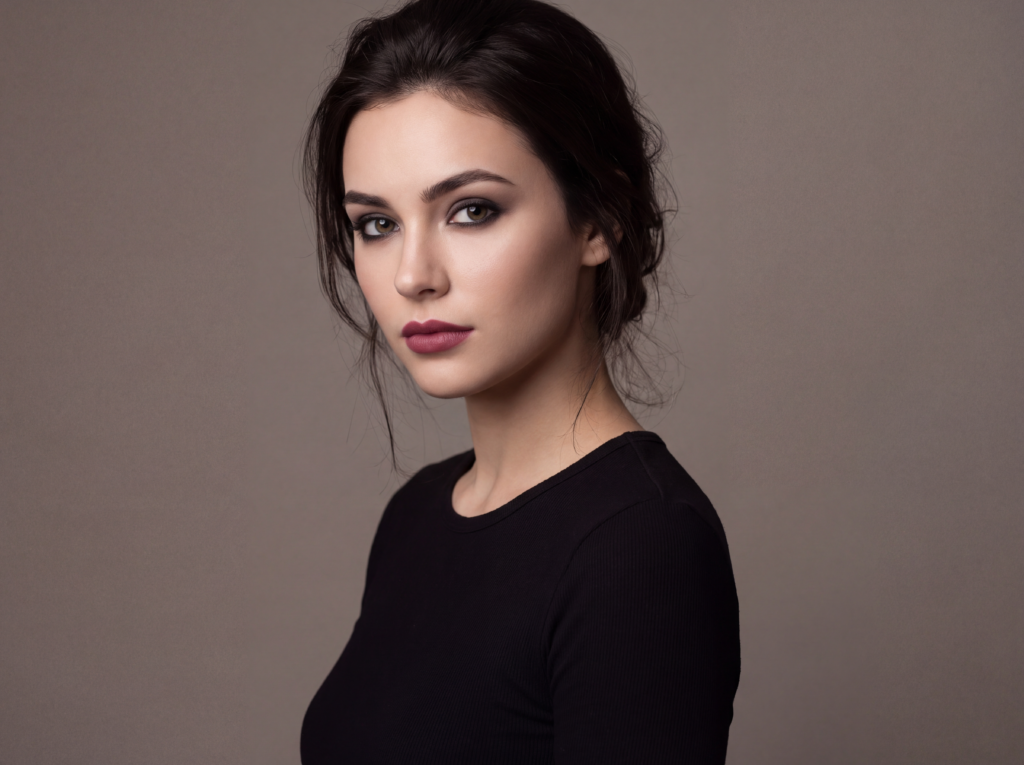
Start With the Complexion
A common misconception is that gothic makeup requires extremely pale skin.
It does not.
Your base should still work with your actual skin tone.
Choose a foundation or skin tint that matches you naturally, then decide whether you want the finish to feel soft matte, satin, or slightly luminous.
A matte or softly powdered complexion often works well with darker eye and lip colors because it creates contrast without competing with them.
Concealer can be used where you normally need it, rather than covering the entire face heavily.
If you contour, keep the placement intentional. Cool or neutral tones usually work better for a shadowed effect than warm bronzer when you are creating a darker aesthetic.
The goal is not to erase your complexion.
It is to create a clean canvas that lets the eyes, lips, or both become the focal point.
Build the Eyes Gradually
The eyes are usually the easiest place to introduce gothic makeup.
You do not need a complicated palette.
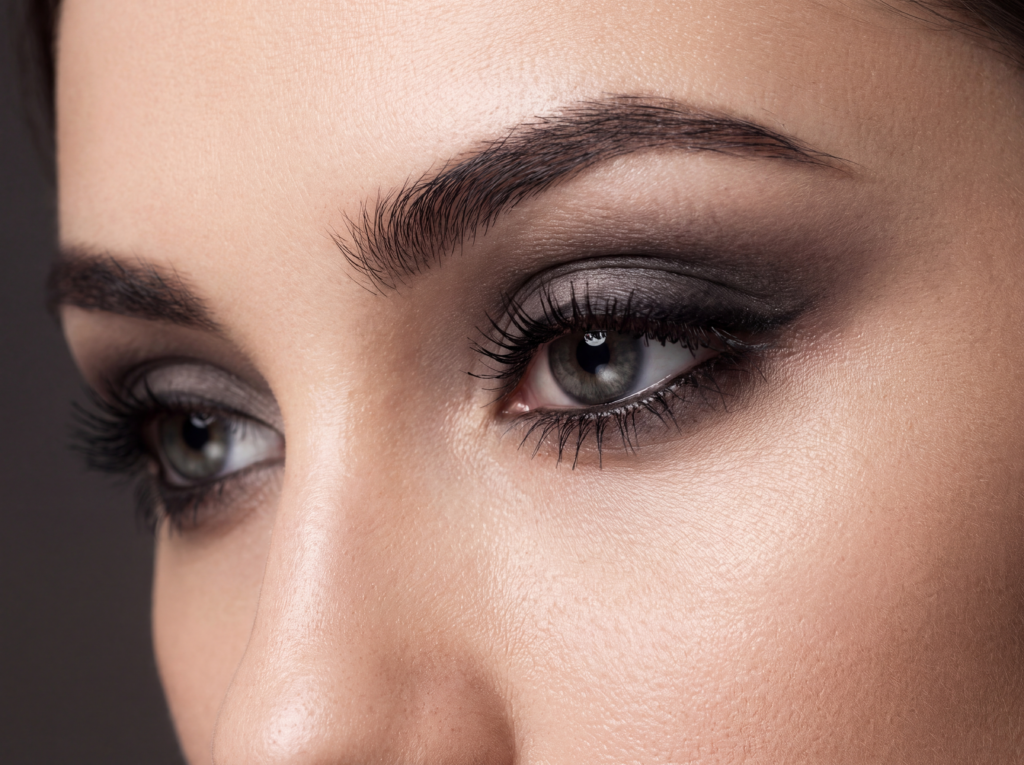
A black, charcoal, taupe, brown, plum, or deep burgundy shadow can do most of the work.
For a beginner-friendly look, start with black or dark brown eyeliner along the upper lash line. Then soften the edge with a small brush or fingertip so it looks slightly lived-in rather than perfectly crisp.
Add a little charcoal or taupe shadow around the outer corner and blend it inward.
Stop there and look at the result before adding more.
That pause matters.
One of the easiest mistakes in dark makeup is continuing to layer simply because the products are there.
For a softer gothic eye, keep the darkest color close to the lashes and outer corner.
For a more dramatic look, extend the shadow into the crease, deepen the lower lash line, or add a sharper wing.
Mascara finishes the look without requiring anything complicated.
Choose the Lip
The lip is where gothic makeup can change dramatically.
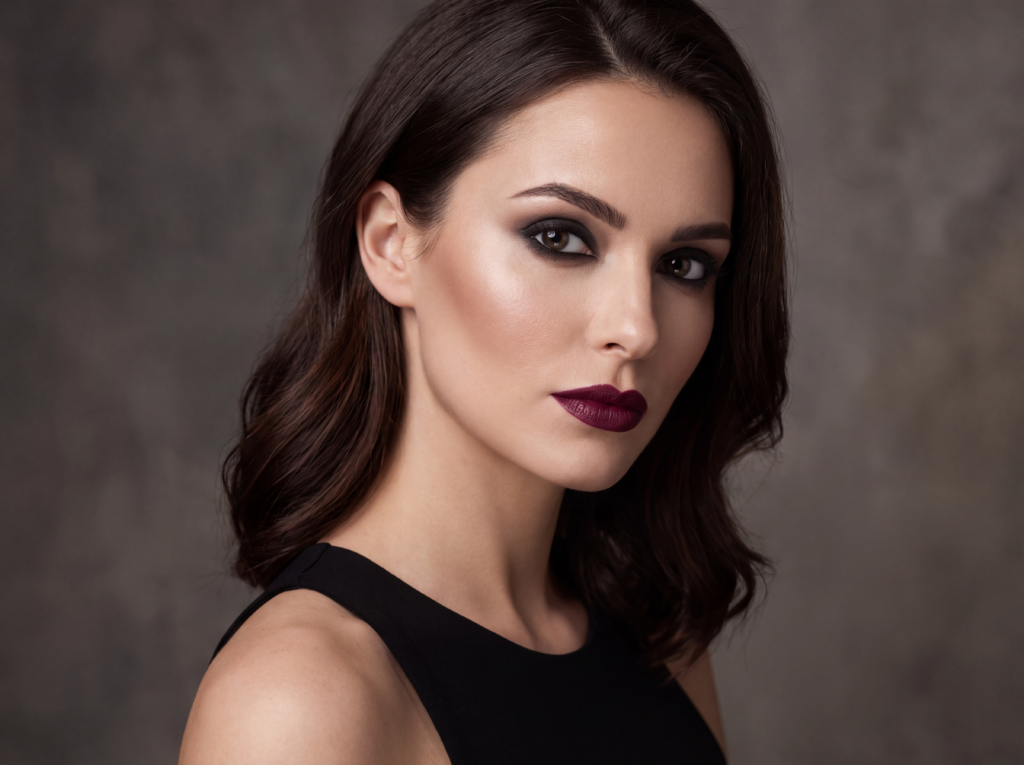
A soft eye paired with a deep lip can look elegant and romantic.
A heavier eye with a muted nude lip can feel more modern and wearable.
A black lip can make the entire look more dramatic immediately.
For beginners, burgundy, oxblood, plum, wine, brick red, and deep berry shades are often easier to wear than true black.
They still create the dark mood without demanding as much precision.
If you do want to try black lipstick, apply it carefully and keep the edges clean. A lip liner can help create shape before the darker color goes on.
The finish matters too.
Matte lipstick feels sharper and more graphic.
A satin or softly glossy finish can make deep colors feel less severe.
Four Easy Gothic Makeup Directions
You do not have to define your style permanently. Think of these as different directions you can experiment with.
Soft Gothic uses natural skin, smudged liner, neutral shadow, mascara, and a muted berry or nude lip.
Romantic Gothic leans into burgundy, plum, softly sculpted eyes, luminous skin, and deeper rose or wine lips.
Dark Glam uses a polished complexion, stronger liner, sculpted eyes, defined lashes, and a rich red, berry, or burgundy lip.
Dramatic Gothic pushes the contrast further with graphic liner, darker shadow, exaggerated shapes, black or near-black lips, and a more stylized finish.
Start with whichever version feels closest to how you already wear makeup.
You can always increase the intensity later.
For more dark beauty inspiration, browse our Alt Beauty features.
What Beginners Usually Overdo
The most common beginner mistake is not using dark makeup.
It is using every dark makeup technique at once.
Heavy foundation, dramatic contour, thick brows, black shadow, black liner, heavy lower-lash makeup, false lashes, and a black lip can quickly become difficult to balance if you are still learning placement and blending.
Instead, choose one dominant feature.
If the eyes are dramatic, consider a quieter lip.
If the lip is very dark, the eyes can be softer.
You also do not need to make your skin several shades lighter to create a gothic look.
Matching your complexion properly usually produces a more polished result.
Dark beauty works on every skin tone. The colors and contrast simply need to be adjusted to the person wearing them.
A Simple Five-Product Gothic Starter Kit
You can create several beginner gothic looks with only a few products:
- A foundation, skin tint, or concealer that matches your complexion
- Black or deep brown eyeliner
- A neutral, charcoal, plum, or burgundy eyeshadow
- Black mascara
- A deep berry, wine, burgundy, red, or black lipstick
You do not need to buy an entirely new makeup collection.
Start with what you already own and add one darker product at a time.
This also helps you figure out which parts of the aesthetic you actually enjoy wearing before spending money on products you may rarely use.
The best approach to gothic makeup for beginners is to start with products you already own and introduce darker colors gradually.
Color Matters More Than Quantity
Gothic makeup is often associated with black, but black is only one option.
Charcoal creates a softer smoky effect.
Plum and burgundy introduce color without losing the darker mood.
Deep brown can make gothic makeup feel warmer and more wearable.
Muted gray, taupe, wine, deep green, navy, and cool mauve can all work depending on the look.
This is especially useful if pure black feels too severe.
The gothic effect often comes from the relationship between colors rather than simply making everything darker.
Gothic Makeup FAQs
Do You Have to Wear Black Lipstick for Gothic Makeup?
No.
Black lipstick is one expression of gothic beauty, not a requirement.
Deep red, burgundy, plum, wine, berry, and even muted nude shades can all work depending on the rest of the makeup.
If you are new to darker lipstick, burgundy is often an easier starting point.
Can Gothic Makeup Look Natural?
Yes.
A natural gothic look might use clean skin, softly smudged black liner, mascara, lightly sculpted cheeks, and a muted berry lip.
The colors and styling can suggest a darker aesthetic without making the makeup dramatic.
This can be especially useful for daytime, work, or anyone who prefers understated makeup.
What Eyeshadow Colors Work for Gothic Makeup?
Black and charcoal are classics, but they are not the only choices.
Deep brown, plum, burgundy, gray, navy, forest green, taupe, and muted purple can all create gothic looks.
Beginners may find slightly softer shades easier to blend than solid black.
Is Gothic Makeup Only for Pale Skin?
Gothic makeup is an aesthetic, not a skin tone.
The same principles can work across all complexions: strong contrast, deeper color, intentional liner, smoky eyes, sculpted features, and moody lip shades.
The products should complement the wearer rather than trying to imitate someone else’s complexion.
What Is the Difference Between Goth Makeup and Emo Makeup?
There is overlap, and neither style has a single fixed formula.
Gothic makeup often draws from a wider range of dark subcultures and aesthetics, including romantic, traditional, Victorian-inspired, punk-influenced, and dramatic looks.
Emo makeup is often associated more strongly with heavy eyeliner, dark eye makeup, and styles connected to emo music and fashion.
In practice, individual looks can borrow from both.
The label matters less than creating something that feels intentional and authentic to the style you want.
Gothic Makeup for Beginners:
If you are completely new to gothic makeup, do not begin with the most dramatic look you can find.
Start with your normal makeup routine.
Then change one thing.
Smudge the liner darker.
Replace your usual lipstick with burgundy.
Add charcoal shadow to the outer corner.
Make the brows slightly more defined.
Once that feels comfortable, add another element.
Gothic makeup becomes much easier when you build it rather than costume it.
The goal is not to look like someone else’s version of goth.
It is to find the darker details that work on your own face, with your own style, and at the level of intensity you actually enjoy wearing.