
Affiliate disclosure: This article contains affiliate links. If you purchase through these links, American Gothic Times may earn a commission at no additional cost to you.
A Gothic dress can be dramatic without feeling like a costume.
The best Gothic dresses borrow from different corners of dark fashion—Victorian tailoring, romantic lace, punk hardware, flowing black fabrics, and modern minimalist silhouettes—and turn those influences into clothing that can actually be worn.
That means there is no single dress that defines Gothic style. A floor-length velvet gown can look Gothic, but so can a simple black mini dress styled with boots, silver jewelry, and a structured jacket.
Whether you’re building your first Gothic wardrobe or looking for a statement piece, understanding the major styles makes finding the right dress much easier.
What Makes a Dress Gothic?
A black dress isn’t automatically a Gothic dress.
Gothic fashion is usually created through a combination of silhouette, fabric, detailing, and styling rather than color alone.
Common elements include black or deep jewel-toned fabrics, lace, velvet, corset-inspired construction, dramatic sleeves, high necklines, layered skirts, silver hardware, and historical influences.
Some designs lean heavily into Victorian Gothic fashion. Others borrow from punk, romantic Goth, alternative streetwear, or contemporary fashion.
The result can range from elaborate to surprisingly understated.
Color
Black remains the foundation of most Gothic wardrobes, but it isn’t the only option.
Deep burgundy, oxblood, plum, midnight blue, forest green, and dark gray can all work beautifully within a Gothic palette.
A dark red velvet dress, for example, can feel every bit as Gothic as a black lace dress when paired with the right accessories.
Fabric
Fabric can completely change the mood of a dress.
Velvet creates richness and drama. Lace adds romantic or Victorian character. Mesh introduces a more contemporary alternative edge, while satin can create a sleek dark-luxury look.
Even a simple cotton dress can work in a casual Goth wardrobe when the silhouette and styling are right.
7 Gothic Dress Styles Worth Knowing
Rather than looking for one universal “Gothic dress,” start by deciding which side of Gothic fashion appeals to you.
1. Victorian Gothic Dresses
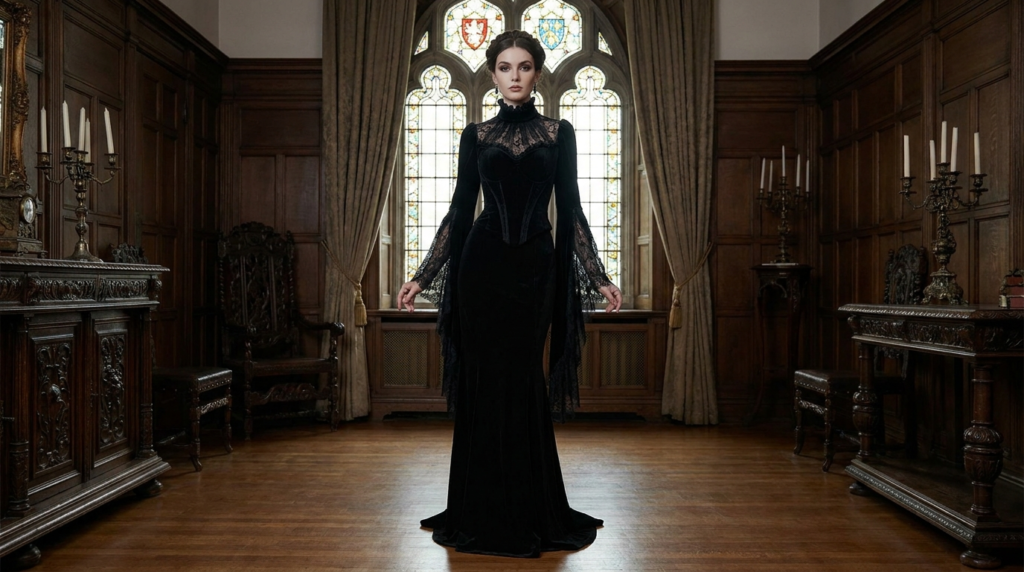
Victorian Gothic dresses draw inspiration from nineteenth-century fashion without necessarily reproducing historical clothing exactly.
Look for high collars, lace panels, fitted bodices, long skirts, puffed or bell sleeves, and ornate detailing.
Black is the obvious choice, but burgundy, dark green, and deep purple work particularly well with this style.
Victorian-inspired dresses make strong statement pieces and can be especially effective for formal events, photography, concerts, and occasions where you want a more dramatic look.
2. Romantic Gothic Dresses
Romantic Goth style tends to feel softer and more ethereal.
Flowing skirts, sheer sleeves, lace overlays, velvet, corset details, and delicate necklines are common.
Instead of relying heavily on studs or chains, romantic Gothic dresses often create drama through movement, texture, and silhouette.
Pair one with a velvet choker, dark gemstone jewelry, or lace-up boots without overwhelming the dress itself.
3. Casual Goth Dresses
Not every Gothic outfit needs to look elaborate.
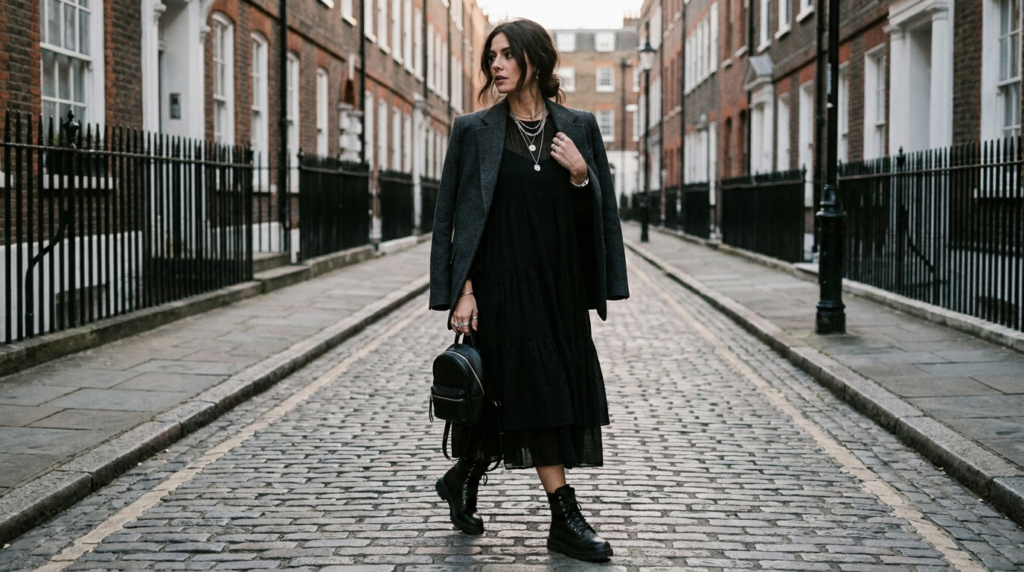
A casual Goth dress might be a simple black mini or midi dress with an interesting neckline, fitted waist, mesh panel, or subtle hardware.
These are some of the most useful pieces to own because accessories can change the entire outfit.
Wear the same black dress with combat boots and a leather jacket one day, then add silver jewelry and a long coat for a completely different look.
4. Gothic Maxi Dresses
A Gothic maxi dress creates drama primarily through length and movement.
Look for flowing black fabrics, fitted waists, long sleeves, lace inserts, asymmetric hems or subtle corset details.
Maxi dresses can also be surprisingly versatile. A relatively simple design works for everyday dark fashion, while velvet and heavily detailed versions can become formal Gothic outfits.
5. Gothic Mini Dresses
Gothic mini dresses often lean toward punk, alternative, or modern Goth aesthetics.
Common features include lace-up details, harness-inspired straps, buckles, mesh panels, and fitted silhouettes.
Platform boots or patterned tights can make the outfit more dramatic, while simpler footwear keeps it wearable.
The key is balance. If the dress already has extensive hardware and detailing, you usually don’t need equally elaborate accessories.
6. Gothic Corset Dresses
Corset-inspired construction is one of the most recognizable elements in Gothic fashion.
Some dresses contain actual structured bodices, while others simply use lace-up fronts, boning-inspired seams, or fitted panels to create the appearance.
These designs work particularly well with romantic, Victorian, and dark-fantasy aesthetics.
Fit matters here more than almost anywhere else. A corset-style dress should feel supportive rather than painfully restrictive.
7. Elegant Gothic Dresses
Gothic fashion can also be refined and minimalist.
An elegant Gothic dress may use a relatively simple silhouette combined with luxurious fabric, dramatic tailoring, or carefully chosen accessories.
Think long black velvet dresses, fitted dark gowns, structured sleeves, or clean silhouettes with one striking detail.
This is often the easiest Gothic style to adapt for dinners, weddings, and formal events where extremely theatrical clothing might feel out of place.
How to Choose a Gothic Dress You’ll Actually Wear
The most dramatic dress isn’t necessarily the best purchase.
Before buying, think about where you’re realistically going to wear it.
If you’re building your first Gothic wardrobe, a versatile black dress that works with different accessories may be more useful than an elaborate Victorian gown.
Someone with an established wardrobe, on the other hand, may get much more value from a statement piece.
Start With the Silhouette
Ignore the accessories in the product photos for a moment and look at the actual shape of the dress.
Do you prefer fitted or flowing clothing?
Mini, midi, or maxi?
Defined waist or relaxed silhouette?
Long sleeves or sleeveless?
Knowing those answers dramatically narrows the search.
Check the Fabric
Product photographs don’t always reveal how a fabric feels.
Before buying online, check the material composition and care instructions.
Velvet, lace, and delicate mesh may require more care than everyday cotton or polyester blends.
Also consider the season. A heavy velvet dress may be perfect in autumn and winter but uncomfortable during hot weather.
Read the Size Chart
Alternative-fashion sizing can vary significantly between brands.
Don’t assume your normal size will automatically fit.
Compare your measurements with the specific brand’s size chart, especially for fitted dresses and corset-inspired designs.
How to Style a Gothic Dress
A dress provides the foundation. Accessories determine where the outfit goes next.
Boots
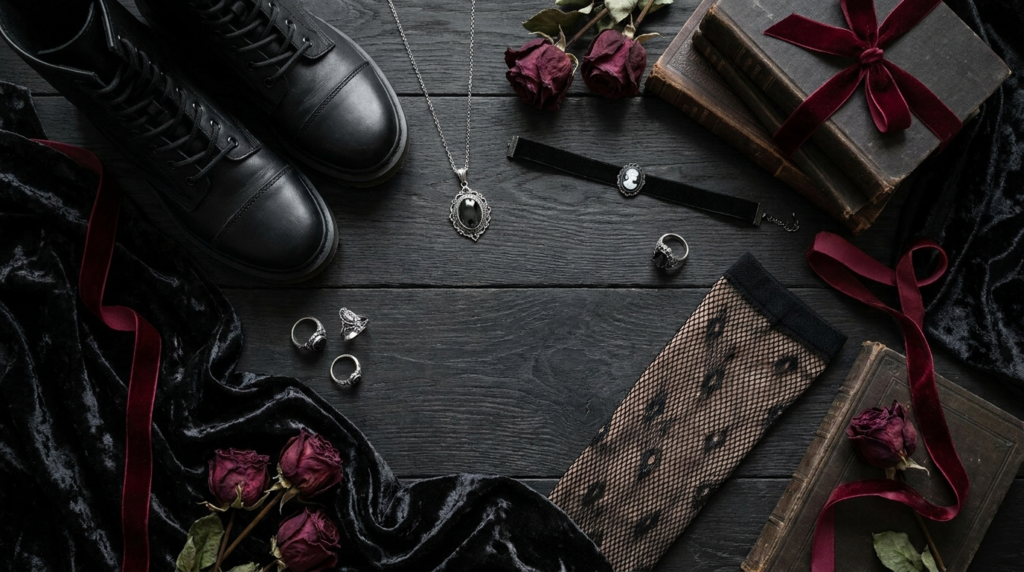
Combat boots can make a romantic dress feel tougher.
Platform boots amplify a modern Goth outfit, while pointed or heeled boots can make a long dress feel more elegant.
Gothic Jewelry
Silver-toned necklaces, chokers, rings, and earrings work naturally with dark clothing.
But more isn’t always better.
If the dress has an ornate neckline, consider earrings and rings rather than layering several necklaces over it.
Tights and Hosiery
Fishnet, patterned, and lace tights can completely transform a simple black dress.
They’re particularly useful for turning an otherwise basic outfit into something that feels deliberately Gothic.
Jackets and Outerwear
Leather jackets add a punk influence.
Long black coats create a dramatic silhouette.
Structured blazers can push a Gothic outfit toward dark academia or modern dark luxury.
This is one reason a relatively simple Gothic dress can be more useful than it first appears.

Can You Wear Gothic Dresses Casually?
Absolutely.
The easiest way is to reduce the number of statement elements you’re wearing at once.
Take a simple black dress and add boots, one silver necklace, and a dark jacket. The outfit still reads as Gothic without looking like you’re dressed for a themed event.
This approach also makes Gothic fashion easier for beginners because you can gradually experiment with stronger pieces.
You don’t need an entirely new wardrobe overnight.
Gothic Dresses for Different Seasons
If you’re still deciding where to shop, explore our guide to the best Gothic clothing brands for more dark fashion options.
Spring
Use lighter fabrics, sheer layers, and shorter sleeves while keeping a dark color palette.
A black midi dress with lightweight boots and silver jewelry can work well as temperatures rise.
Summer
Look for breathable fabrics and simpler silhouettes.
Sleeveless black dresses, lightweight maxi dresses, and flowing skirts can preserve the aesthetic without relying on heavy layering.
Autumn
This is where Gothic fashion becomes especially easy to layer.
Velvet, lace tights, boots, long coats, and deeper burgundy or plum colors fit naturally into autumn wardrobes.
Winter
Use heavier fabrics and layering strategically.
Long dresses can be paired with thermal tights, boots, fitted sweaters, coats, and scarves without losing the overall silhouette.
What to Look for When Shopping for Gothic Dresses
Don’t buy purely from the product photograph.
Look at the size chart, fabric composition, garment measurements, care instructions, customer photographs, and return policy.
Pay particular attention to reviews discussing fit.
If several buyers mention that a dress runs small in the bust or waist, that’s much more useful than simply knowing whether they liked it.
And if you’re buying an elaborate Gothic dress, ask yourself one simple question:
Can I imagine at least three occasions or outfits where I would actually wear this?
If the answer is no, a more versatile piece may be the better purchase.
Gothic Dress FAQs
Do Gothic Dresses Have to Be Black?
No. Black is dominant in Gothic fashion, but burgundy, dark green, purple, gray, and other deep colors can work beautifully.
The overall silhouette, fabric, details, and styling matter more than following a strict color rule.
What Shoes Go With a Gothic Dress?
Combat boots, platform boots, heeled boots, and alternative-style shoes can all work.
Choose footwear based on the dress rather than assuming every Gothic outfit requires the largest platform boots possible.
Can You Wear a Gothic Dress to a Wedding?
Yes, provided the dress fits the wedding’s dress code.
An elegant black, burgundy, or jewel-toned Gothic dress can work particularly well for evening and formal weddings. Avoid anything the couple has specifically asked guests not to wear.
What’s the Difference Between a Goth Dress and a Gothic Dress?
In shopping and everyday fashion language, the terms are often used interchangeably.
Individual Gothic subcultures and styles have their own histories and influences, however, so not every garment marketed as “Goth” necessarily represents traditional Goth fashion.
Are Gothic Dresses Only for Special Occasions?
No. Gothic dresses range from elaborate formal gowns to simple everyday dresses.
Casual designs are often easier to incorporate into a regular wardrobe because they can be styled differently with shoes, jewelry, jackets, and hosiery.
Building a Gothic Wardrobe Around One Great Dress
You don’t need dozens of Gothic dresses to build a strong dark wardrobe.
For more ideas on building a versatile dark wardrobe, see our Modern Gothic Capsule Wardrobe guide.
Start with one dress that fits properly, suits your lifestyle, and works with pieces you already own.
Then experiment.
Change the boots. Add a velvet choker. Layer a jacket over it. Try patterned tights. Swap delicate jewelry for heavier silver pieces.
The strongest Gothic wardrobes aren’t necessarily the largest. They’re the ones where individual pieces can be combined in different ways without losing the wearer’s personal style.
A great Gothic dress should give you more possibilities—not just another piece hanging untouched in the closet.
[…] ball is ideal for anyone who loves romantic Gothic fashion. Invite guests to wear dark suits, lace dresses, dramatic jewelry, and vintage-inspired […]