
An exploration of black lace, luxurious velvet, romantic silhouettes, and the art of bringing Gothic elegance into everyday life.
Gothic fashion has never belonged exclusively to the shadows. Its enduring appeal lies in the way it transforms clothing into something more personal: a reflection of history, art, emotion, and individuality.
In 2026, Gothic romance has found renewed visibility in contemporary fashion. Lace, velvet, corset-inspired tailoring, sweeping silhouettes, and antique-inspired accessories have appeared across seasonal collections. Yet the most interesting expression of the aesthetic isn’t necessarily found on the runway. It happens when these distinctive elements become part of everyday wardrobes.
Imagine a black lace blouse beneath a structured blazer, a velvet skirt paired with comfortable boots, or an antique-inspired necklace worn with a simple black sweater.
These combinations capture something essential about modern Gothic style: darkness and elegance can coexist with comfort, practicality, and personal expression.
Whether you’re discovering Gothic fashion for the first time or refining a wardrobe you’ve loved for years, the following ideas offer a thoughtful way to make dark romance your own.
What Is Modern Gothic Fashion?
Modern Gothic fashion draws from a rich visual history that includes Victorian mourning dress, Romantic literature, Gothic architecture, underground music, and alternative subcultures.
Although black remains central to the aesthetic, Gothic fashion is not simply about wearing dark clothes. Texture, shape, symbolism, and atmosphere all play important roles.
Traditional Gothic looks might feature dramatic lace, corsets, long skirts, elaborate jewelry, and platform boots. Contemporary interpretations can be considerably more understated.
A tailored black coat, textured knit, dark trousers, and an elegant silver pendant can communicate Gothic influence without recreating historical clothing.
What makes these looks successful is intention. Each element contributes to a distinctive visual identity. Modern Gothic fashion combines timeless dark aesthetics with contemporary clothing, allowing individuals to express their personal style through elegant, wearable outfits.
Modern Gothic style is less about following a uniform and more about creating a wardrobe that feels unmistakably your own.
Why Dark Romance Feels Especially Relevant in 2026
ELLE magazine explores this renewed interest in romantic Gothic fashion, highlighting Victorian-inspired velvet, lace, and corsetry in its Fall 2026 editorial.
Fashion frequently returns to historical influences, but each generation interprets them differently.
This season, romantic details such as lace, velvet, corsetry, high necklines, and flowing fabrics are being paired with sharper contemporary tailoring. The result creates an interesting contrast between softness and structure.
That contrast is especially well suited to Gothic style.
A delicate lace blouse becomes more wearable with straight-leg trousers. A dramatic skirt feels grounded with a simple knit. An ornate velvet jacket can elevate an otherwise minimal outfit.
Rather than dressing entirely in elaborate historical-inspired garments, contemporary Gothic fashion encourages experimentation.
For longtime members of Gothic communities, none of these pieces is new. What has changed is their visibility within broader fashion conversations.
The aesthetic’s deeper identity, shaped by music, art, community, and individual expression, continues well beyond any seasonal trend.
1. Start With Black Lace
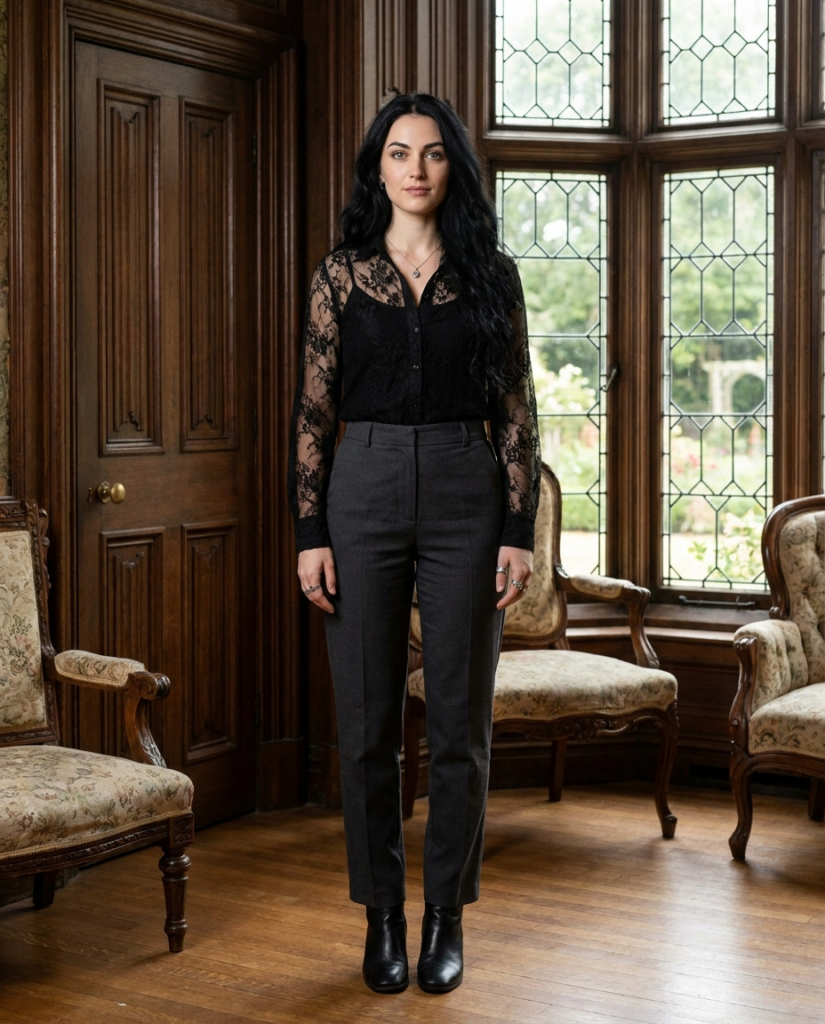
Vogue’s Fall 2026 fashion coverage also demonstrates how romantic lace can be incorporated into contemporary wardrobes through practical layering and contrasting textures. Few fabrics communicate Gothic romance as immediately as black lace.
Its appeal comes from contrast: delicate floral patterns against dark fabric, transparency layered over opacity, and intricate detail within an otherwise restrained silhouette.
For everyday styling, begin with a single lace piece rather than an entire coordinated outfit.
A black lace blouse looks beautiful with tailored trousers or dark denim. A lace-trimmed camisole can be worn beneath a cardigan or structured jacket. A long-sleeved lace top becomes more practical when layered over an opaque tank.
The key is balancing its decorative quality with simpler garments.
2. Make Velvet an Everyday Luxury
Velvet has a long association with richness, drama, and romantic dressing. Its soft surface absorbs and reflects light in ways that make even a simple garment feel distinctive.
A black velvet blazer is particularly versatile. It can be worn with dark jeans, a plain top, and comfortable loafers for an understated daytime look.
A velvet midi skirt offers another approachable option, especially when styled with a fitted knit or button-down shirt.
Black is the classic choice, but deep burgundy, midnight blue, and forest green can bring subtle variation to a Gothic wardrobe.
When choosing velvet, consider the weight and drape. A beautifully flowing fabric often looks more sophisticated than a stiff material that doesn’t move naturally.
3. Balance Romantic Details With Modern Tailoring
One of the most effective ways to make Gothic fashion wearable is to combine its romantic elements with structured basics.
A corset-inspired top can work beneath an oversized blazer. A dramatic high-neck blouse can be paired with straight-leg trousers. A flowing skirt can be grounded by a sharply tailored coat.
The contrast keeps the outfit visually interesting without becoming overly theatrical.
For work environments, a black high-neck blouse with subtle ruffles beneath a dark blazer offers a refined Gothic influence. Choose opaque fabrics and comfortable silhouettes appropriate to your workplace.
For an evening outing, exchange the blazer for a fitted velvet jacket and add a stronger accessory.
The same foundational pieces can create multiple looks.
4. Choose Boots That Define the Outfit
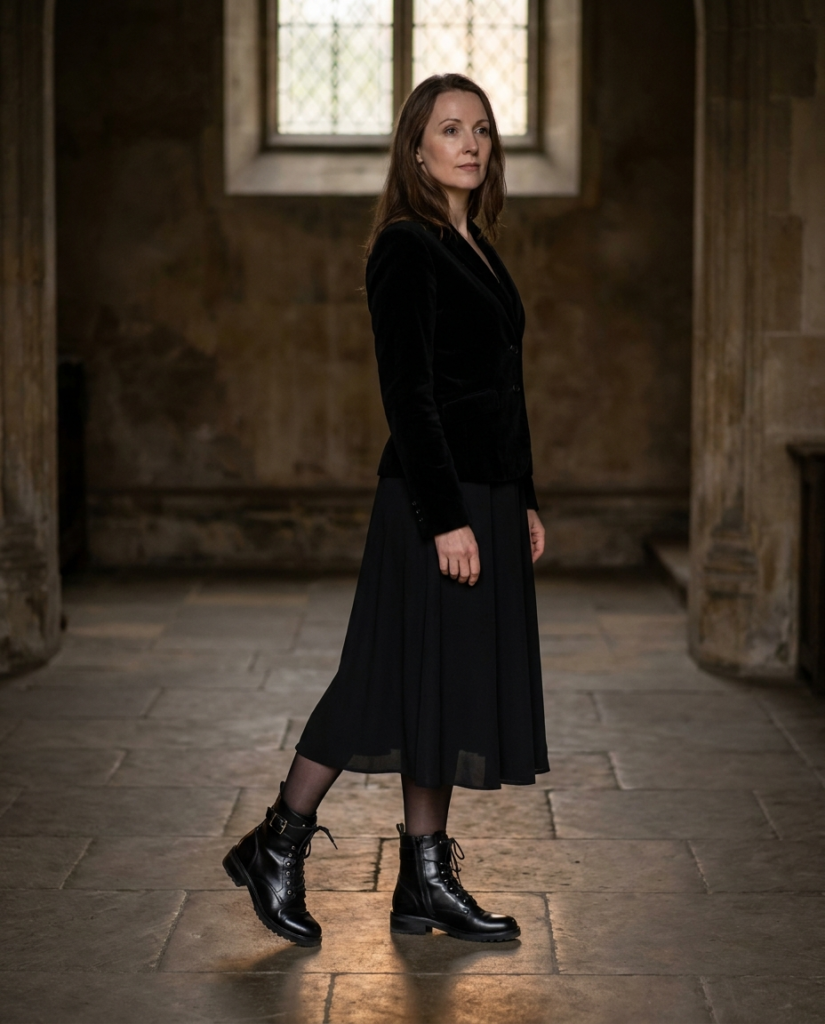
Footwear can change the mood of an outfit more dramatically than almost any other accessory.
Lace-up boots, sturdy platform silhouettes, pointed ankle boots, and polished leather footwear each introduce a different Gothic influence.
For daily wear, comfort and practicality should guide the choice.
A low-heeled lace-up boot works with black jeans, midi skirts, and layered dresses. A more dramatic platform boot can become the centerpiece of a weekend outfit, while a sleek pointed boot pairs beautifully with tailored clothing.
The goal isn’t necessarily to choose the tallest or most elaborate design.
A well-made pair of black boots with an interesting shape can be equally expressive.
Styling idea: Try a romantic lace skirt with practical leather ankle boots. The contrast between delicate and sturdy creates a modern interpretation of dark romance.
5. Let Jewelry Tell a Story
Gothic jewelry often draws inspiration from architecture, history, mythology, and symbolic ornament.
Think dark gemstones, ornate filigree, silver pendants, antique-inspired rings, and beautifully detailed chains.
These accessories can provide Gothic character even when the rest of the outfit is simple.
A black dress becomes more distinctive with an elaborate onyx-inspired pendant. A white shirt and dark trousers feel more romantic with a vintage-style brooch. A simple knit gains personality when paired with a collection of carefully chosen rings.
Rather than wearing every statement piece at once, select one focal accessory.
This creates visual balance and allows the craftsmanship to stand out.
For a more sustainable approach, explore vintage shops, independent artisans, and secondhand marketplaces for unusual pieces.
6. Experiment With Layers and Silhouettes
Layering is one of the most practical ways to explore Gothic fashion.
A sheer lace blouse under a sleeveless dress creates texture without requiring an elaborate outfit. A long cardigan over a fitted black dress softens the silhouette. A structured leather-look jacket introduces contrast against flowing fabrics.
These combinations can be adjusted throughout the year.
During colder months, combine dark knitwear with velvet skirts, wool coats, and opaque tights. In warmer weather, lighter cotton, linen blends, and breathable lace can offer a similar visual effect without excessive layering.
When experimenting, begin with proportions.
If the lower half of an outfit is voluminous, a more fitted top may create balance. If a blouse features exaggerated sleeves or ruffles, simpler trousers can prevent the look from feeling visually crowded.
There are no absolute rules, but thoughtful proportions help each piece feel intentional.
7. Build a Color Palette Beyond Black
Although black is foundational to Gothic fashion, a monochromatic wardrobe doesn’t have to look flat.
Combining charcoal, ink black, faded black, and textured dark fabrics creates depth.
For additional color, consider burgundy, deep plum, forest green, antique ivory, or muted pewter.
These shades complement black beautifully while maintaining the darker atmosphere associated with Gothic dressing.
One particularly elegant combination is black velvet with deep burgundy accessories. Another is a charcoal coat layered over an ivory high-neck blouse and black trousers.
Materials matter as much as color.
Pairing matte cotton with softly reflective satin or textured lace adds richness without requiring a brighter palette.
Remember: A wardrobe can feel Gothic because of its shapes, textures, and styling, even when an outfit contains very little black.
8. Create a Gothic Wardrobe Without Buying Everything New
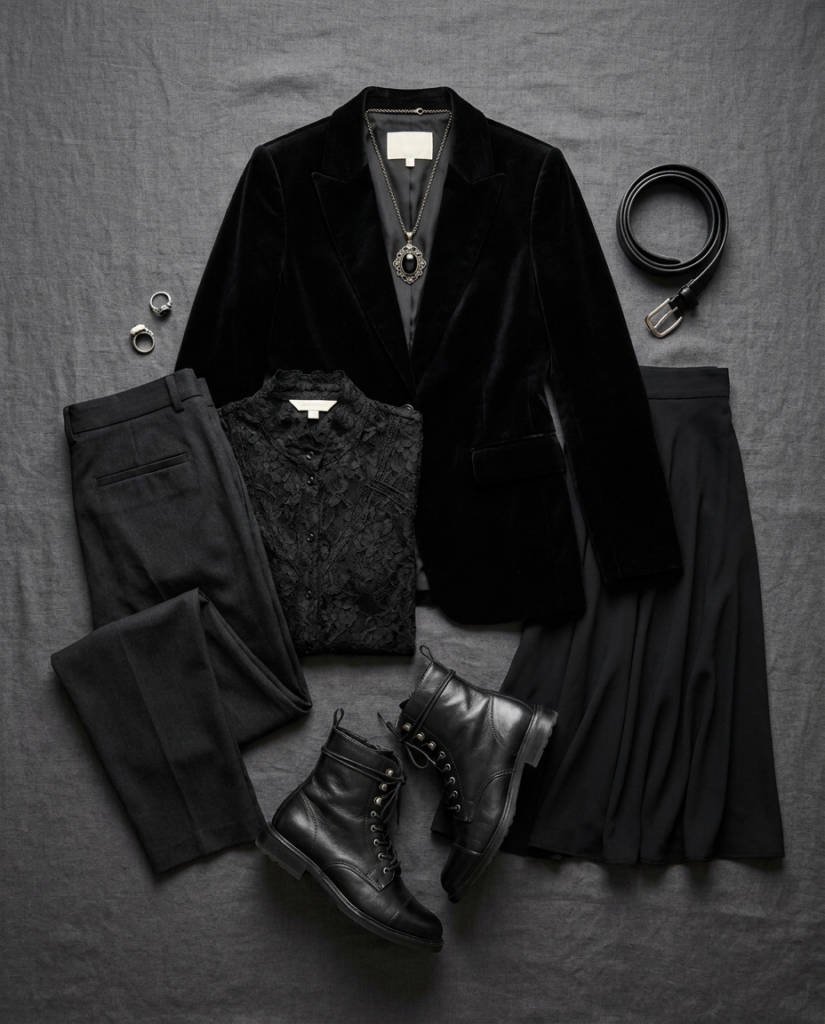
A thoughtful wardrobe usually begins with pieces you already own.
Before shopping, look through your closet for black jeans, plain knitwear, dark blazers, long skirts, leather jackets, and simple boots.
Many of these garments can become part of a Gothic outfit when styled differently.
For example, an ordinary black cardigan can be worn over a lace camisole and paired with an ornate pendant. A tailored blazer can transform a flowing dress into an elegant daytime look.
Secondhand shopping can also reveal unique pieces, particularly vintage velvet jackets, embroidered blouses, brooches, and dark accessories.
Focus on quality, comfort, versatility, and personal meaning rather than collecting items simply because they are labeled Gothic.
A smaller wardrobe of carefully selected garments can provide far more outfit possibilities than a closet filled with disconnected purchases.
9. Find Your Own Gothic Identity
Gothic fashion includes many different styles, each with its own history and visual language.
Romantic Gothic fashion favors lace, flowing fabrics, historical details, and elegant silhouettes.
Minimal Gothic looks often emphasize black tailoring, clean lines, restrained accessories, and architectural shapes.
Punk-influenced Gothic fashion incorporates hardware, distressed textures, boots, and more rebellious styling.
Everyday Gothic dressing may combine elements of these approaches with ordinary wardrobe essentials.
You don’t have to choose one category permanently.
Fashion is an opportunity to experiment, discover what feels comfortable, and express your individuality.
Someone may prefer dramatic velvet gowns for special occasions and simple black jeans with silver jewelry on an ordinary afternoon.
Both can be authentic expressions of personal style.
10. Five Easy Modern Gothic Outfits to Try
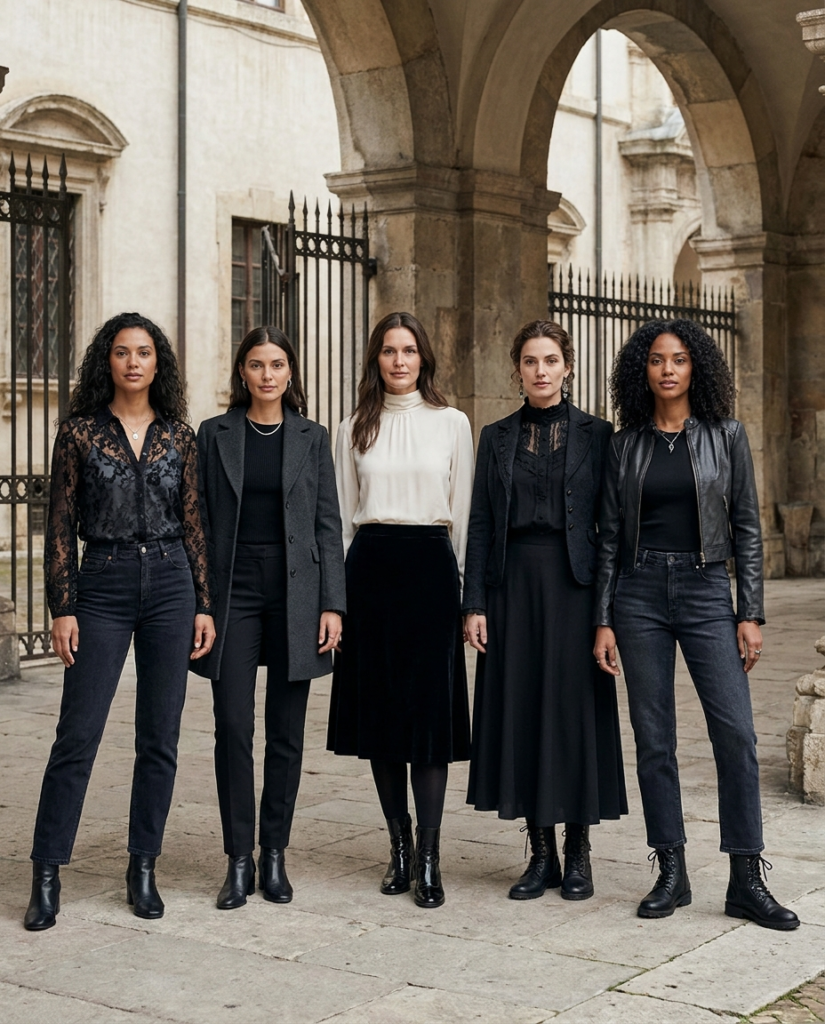
If you’re unsure where to begin, these five combinations offer practical inspiration.
The everyday romantic: A black lace top, charcoal jeans, ankle boots, and a delicate pendant necklace.
The polished minimalist: Black tailored trousers, a fitted knit, a structured coat, and sleek boots.
The velvet enthusiast: A dark velvet midi skirt, tucked-in blouse, opaque tights, and simple leather footwear.
The modern Victorian: A high-neck blouse, fitted jacket, long black skirt, and antique-inspired earrings.
The weekend alternative: Dark denim, a leather-look jacket, a comfortable black top, and lace-up boots.
Each outfit can be adapted using clothing already in your wardrobe.
Start with one distinctive feature and let the remaining garments support it.
Where Gothic Fashion Goes From Here
Gothic fashion continues to evolve because it has never been defined by one silhouette or one moment in time.
Its influences move between historical romance, underground music, art, literature, contemporary fashion, and personal experimentation.
The renewed interest in dark romance during 2026 may bring more lace and velvet into mainstream wardrobes, but the aesthetic’s appeal extends much further than a seasonal trend.
Ultimately, wearing modern Gothic fashion is about creating something that feels personal.
You can embrace dramatic layers or favor quiet, understated details. You can explore historical silhouettes or reinterpret the aesthetic through modern tailoring. The future of modern Gothic fashion lies in individuality, creativity, and the freedom to reinterpret dark romantic style for everyday life.
The most compelling Gothic style is not necessarily the darkest or most elaborate. It is the one that expresses who you are.
Where beauty embraces darkness.
Explore more: Read The New Gothic: Modern Luxury for another perspective on contemporary Gothic elegance.
Discover the world of American Gothic Times — Gothic fashion, beauty, art, literature, and culture.