
THE EDITORIAL
How Gothic culture is becoming a new language of modern luxury.
The room is almost entirely black, but nothing about it feels empty.
Candlelight moves across velvet upholstery. An antique silver pendant rests against the sharp lines of a tailored coat. Somewhere beneath the silence, a darkwave rhythm begins to pulse. The atmosphere is mysterious, yet controlled, elegant, and unmistakably modern.
This is not the Gothic world many people expect
There are no plastic cobwebs, seasonal decorations, or costumes waiting for October. Instead, there is craftsmanship, history, and a careful understanding of how darkness can be used to create beauty.
Gothic culture has never belonged to one century, one musical movement or one way of dressing. It has traveled through medieval architecture, eighteenth-century literature, Victorian mourning traditions, post-punk music, underground fashion and contemporary art. Each generation has taken something from the darkness and reshaped it.
Today, Gothic influence is appearing in tailored fashion, luxury interiors, museum exhibitions, runway collections, digital art, and editorial photography. It has not abandoned its rebellious past. It has simply learned to speak in a more refined language.
This is the New Gothic.
Gothic Was Never Only About Fear
The word “Gothic” carries centuries of meaning.
In architecture, it recalls pointed arches, ribbed vaults, stained glass, and buildings designed to make the human figure feel small beneath their extraordinary height. In literature, it suggests ruined estates, inherited secrets, forbidden rooms, and characters pursued by memories they cannot escape.
In fashion, Gothic style draws on mourning clothing, religious imagery, aristocratic dress, punk, glam rock, romanticism, and the theatrical figure of the vampire.
The Museum at the Fashion Institute of Technology traced this complicated history in its exhibition Gothic: Dark Glamour. The exhibition connected Gothic fashion to the rise of the Gothic novel, Victorian mourning traditions, supernatural imagery, and the later development of goth subculture. It also showed that black can communicate mystery, danger, and death while simultaneously representing elegance and desire.
That complexity is precisely why Gothic culture survives.
Gothic culture allows opposites to exist together. It can be severe and romantic, ancient and futuristic, delicate and powerful. It can mourn what has disappeared while inventing something that has never existed before.
From Subculture to Sophistication
For many people, the word “goth” still brings to mind a narrow stereotype: heavy makeup, black clothing, dramatic accessories and a deliberate rejection of conventional style.
Those elements can certainly be part of the culture, but they are not its boundaries.
Modern Gothic expression is often quieter. A person does not need to wear an elaborate Victorian dress or cover every surface of a home with skulls to create a Gothic atmosphere. The influence may appear in the fall of a black coat, the aged surface of a silver ring, the shape of an arched mirror or the contrast between dark walls and pale candlelight.
The difference is intention.
When Gothic style is treated only as a collection of recognizable symbols, it can quickly begin to feel like a costume. When it is approached through material, silhouette, history, and emotion, it becomes a complete visual language.
The New Gothic is less interested in announcing itself. It creates an atmosphere and allows the details to speak.
The Enduring Power of Black
Black is central to Gothic style, but its power comes from more than darkness.
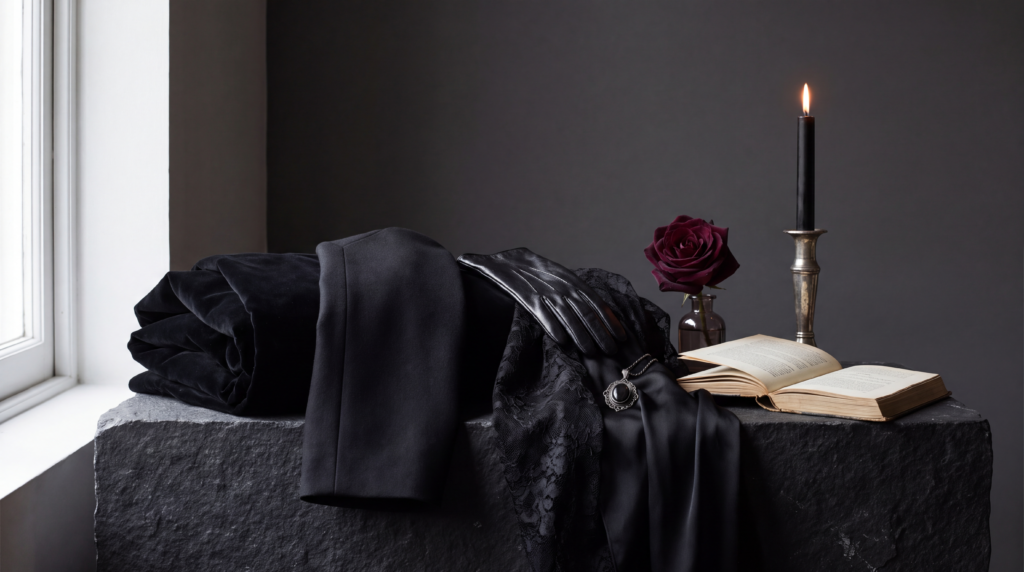
Black reveals texture. Velvet absorbs light while polished leather reflects it. Lace creates transparency. Satin moves between shadow and shine. Wool gives black a soft, almost architectural weight.
When an outfit uses a limited color palette, construction becomes more noticeable. The eye begins to see the shape of a shoulder, the length of a sleeve, the movement of fabric, and the small differences between matte, polished, and sheer surfaces.
This is one reason black moves so naturally between subculture and luxury. It can be rebellious without being chaotic and dramatic without depending on excessive decoration.
The most interesting Gothic wardrobes rarely rely on black alone. Aged ivory, charcoal, oxblood, deep burgundy, tarnished silver, and dark forest green add dimension without breaking the atmosphere. These colors feel as though they belong to old libraries, stone corridors, and rooms that have kept their secrets for generations.
When Craftsmanship Becomes Dark Luxury
Luxury is often misunderstood as a price tag or a visible designer name. Gothic luxury is more convincing when it is expressed through craftsmanship.
Consider the difference between a mass-produced lace accessory and a carefully constructed lace blouse. Both may use the same material, but only one reveals close attention to proportion, texture, and movement.
- A precisely tailored black coat
- A heavy velvet jacket with a strong silhouette
- Hand-finished leather boots
- Antique or artisan-made silver jewelry
- A silk dress that moves like liquid in low light
- Embroidery inspired by vines, cathedral tracery, or decaying flowers
- A structured corset worn as fashion rather than disguise
These pieces feel luxurious because they reward attention. Their beauty becomes clearer the longer they are observed.
Modern Gothic luxury does not need to be covered in obvious symbols. Sometimes its darkest statement is simply an immaculate black garment with an unusual shape.
The Runway Has Entered the Cathedral
Luxury fashion has returned to Gothic ideas repeatedly because the tradition offers designers an unusually rich visual language.
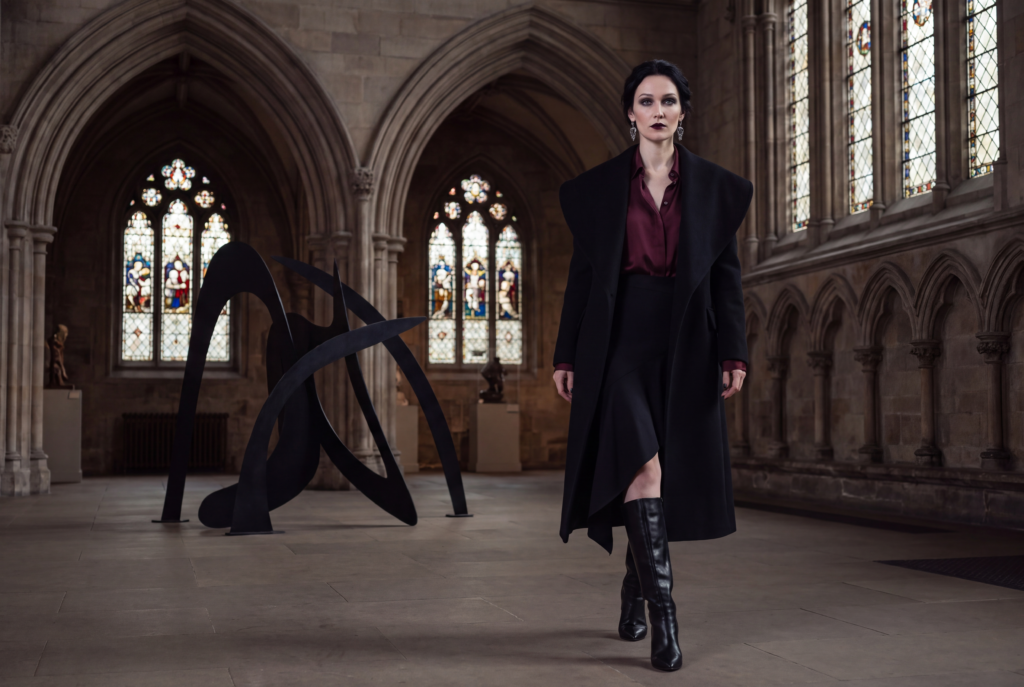
Alexander McQueen’s work explored romanticism, mortality, history, folklore and the beauty found in unsettling imagery. That Gothic inheritance has continued at the fashion house. Its spring 2025 collection drew from the Irish legend of the banshee, combining sharp tailoring with shredded chiffon, smoky staging and ghostlike silhouettes.
Rick Owens has built an equally recognizable world from elongated silhouettes, distressed materials, sculptural clothing, and a palette dominated by black, dust, and stone. In 2025, Paris’s Palais Galliera presented a major retrospective of his work—an uncommon recognition for a living designer. The exhibition placed his dark, unconventional designs within a serious conversation about craftsmanship, culture and fashion history.
This recognition matters.
It shows that aesthetics once dismissed as too dark, strange, or subcultural can enter respected cultural institutions without losing their identity. The darkness is no longer treated merely as a shock. It is examined as a design.
Gothic Luxury Is Not Limited to Clothing
The New Gothic extends beyond the wardrobe.
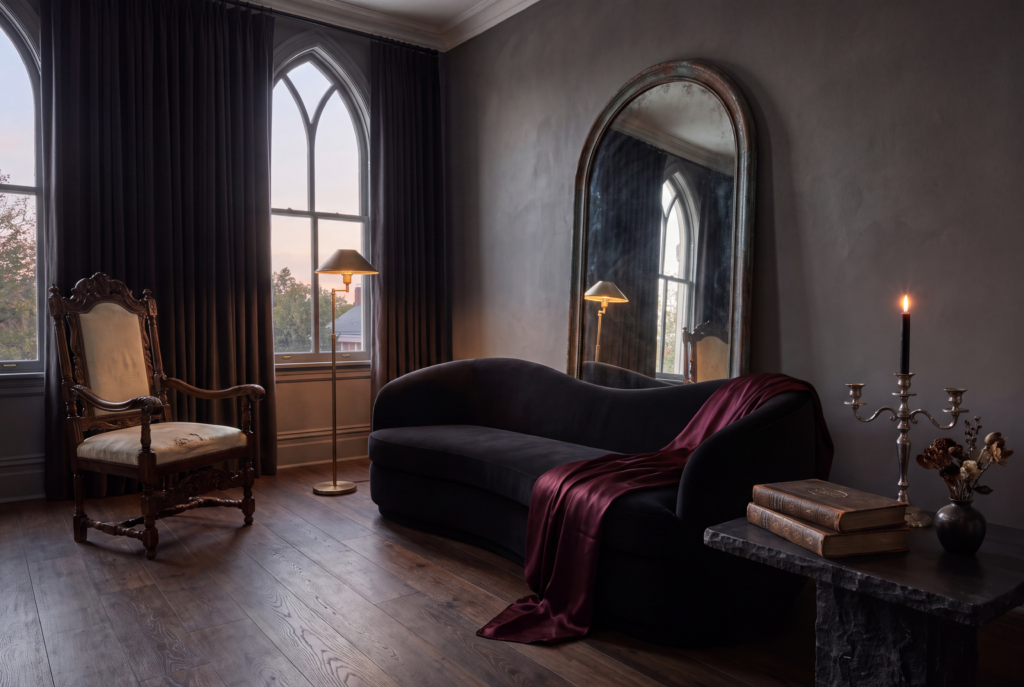
In interior design, dark luxury may begin with charcoal walls, antique wood, aged brass, sculptural lighting, and carefully selected objects. The goal is not to make a room resemble a haunted attraction. It is to create depth, intimacy, and emotional atmosphere.
One dramatic object often carries more power than twenty themed decorations.
A carved mirror, an old portrait, a weathered candelabrum, or a single piece of dark botanical art can establish the mood of an entire room. Natural materials—wood, stone, linen, leather and metal—keep the space grounded.
Architecture contributes another layer. Pointed windows, high ceilings, shadowed corridors, and intricate stonework remind us that buildings can shape emotion. Gothic spaces invite us to look upward, slow down, and become aware of what might be hidden beyond immediate view.
That sense of mystery is one of the rarest forms of modern luxury. In a world designed for speed and constant visibility, the Gothic room keeps something concealed.
The New Gothic Is Personal
There is no single correct way to participate in Gothic culture.
For one person, it may begin with music. For another, it begins with literature, fashion, architecture, photography, or an attraction to places that carry a visible sense of history.
Some people embrace a complete Gothic identity. Others borrow individual elements and combine them with minimalism, romantic fashion, vintage clothing, or quiet luxury.
What matters is respect for the culture behind the aesthetic.
Gothic style becomes most meaningful when curiosity replaces imitation. Learn where the music came from. Read the literature. Study the architecture. Discover the designers and artists who developed the visual language. Support contemporary creators who continue moving the culture forward.
The objective is not to pass an imaginary test of who is “Goth enough.” It is important to understand that Gothic culture is deeper than an algorithmic trend.
Elements of the New Gothic
- Tailored black clothing instead of obvious costume pieces
- Velvet, lace, leather, silk, and structured wool
- Antique silver, sculptural jewelry, and meaningful objects
- Dark interiors with restrained decoration
- Historical references combined with modern silhouettes
- Dramatic beauty balanced by precision
- Architecture that creates wonder and unease
- Darkwave, post-punk, and atmospheric sound
- Romantic imagery without excessive sweetness
- Digital art that combines the ancient and futuristic
- An appreciation for mystery, history, and imperfection
These elements are not rules. They are possible entrances into a much larger world.
Marishka’s Observation
True darkness does not erase beauty. It removes the distractions around it. What remains is shape, texture, memory and the quiet confidence to be misunderstood.
Marishka Vespera
Beyond the Stereotype
The New Gothic is not an attempt to make Gothic culture safer, brighter, or easier for everyone to consume.
Its value lies in its refusal to become ordinary.
But sophistication does not require Gothic culture to abandon rebellion. The two can coexist. A perfectly tailored coat can be confrontational. A quiet room can feel radical. A black dress can carry centuries of symbolism without explaining any of it to the people who see it.
Modern Gothic luxury is not about decorating darkness until it becomes acceptable. It is about recognizing the artistry that was present within it all along.
The Future of Gothic
The next chapter of Gothic culture will not exist only in physical clothing, buildings, or printed books.
Digital artists are constructing impossible cathedrals. Fashion creators are designing garments that could never exist within the limits of traditional fabric. Independent musicians are combining darkwave, cinematic sound, and electronic experimentation. Fictional editorial characters can move between photography, music, video, and storytelling.
Technology gives Gothic creators new materials, but the emotional foundation remains familiar: mystery, beauty, mortality, transformation and the attraction of the unknown.
The tools may change. The shadows remain.
Perhaps that is why Gothic culture continues to return. It does not promise that everything will be cheerful, perfect, or easily understood. It gives beauty to complicated emotions and creates a place for people who see something valuable in the darker corners of art and life.
The New Gothic is not a temporary trend.
It is an old language being spoken with a new voice.
The Last Question
Is Gothic culture becoming more accepted—or has the wider world simply begun borrowing the beauty it once misunderstood?
Continue exploring American Gothic Times for dark fashion, alternative beauty, music, architecture, literature, and the evolving culture of modern Gothic life.
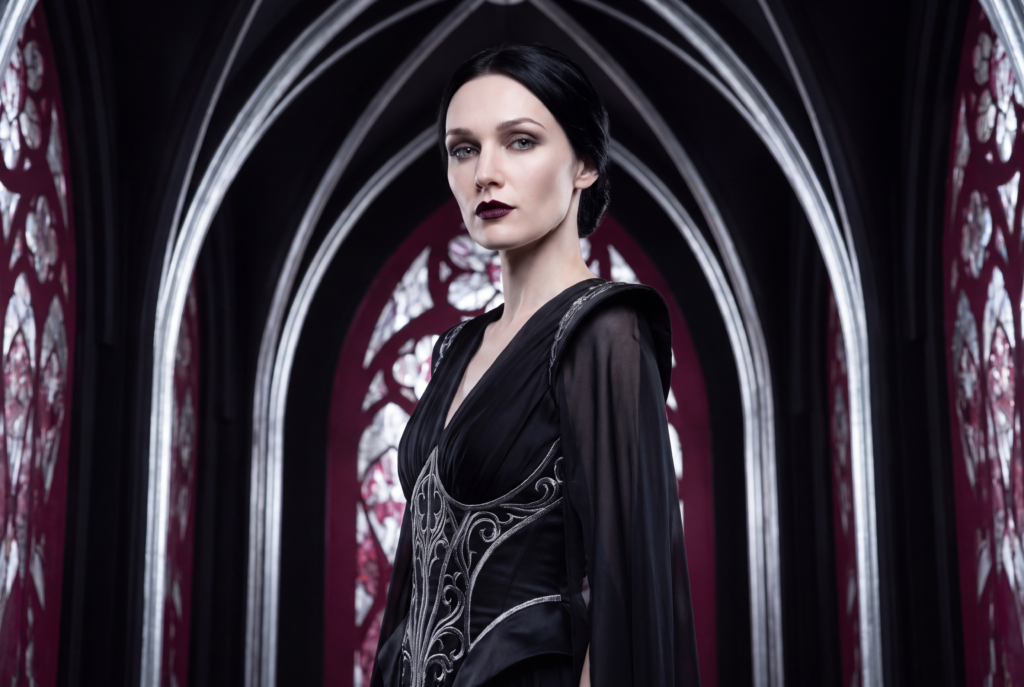
About Marishka Vespera: Marishka Vespera is a fictional AI-created digital character and editorial persona developed for American Gothic Times. Her imagery and commentary are part of the publication’s creative storytelling.