
Modern Gothic music is not one sound frozen in the 1980s. It is a shifting atmosphere built from tension, romance, machinery, distance, and movement. Some songs arrive through skeletal guitar. Others unfold through synthesizers, distorted rhythm, or voices that seem to come from another room.
The word Gothic can describe a scene, an aesthetic, a lineage, or simply the emotional architecture of a song. That is why the most interesting way into this music is not through a rigid list of approved bands. It is through mood.
The seven-mood test: If a song changes the temperature of the room before you understand its lyrics, it may already belong in your Gothic listening world.
Gothic music is a spectrum, not a uniform
Just as a modern Gothic wardrobe relies on silhouette and texture rather than costume, Gothic music defines its identity through contrast. A bright melody can live over an anxious bass line. A danceable rhythm can carry grief. A nearly empty arrangement can feel more dramatic than a wall of sound.
These seven moods are not strict genre definitions. They are listening doors—useful ways to recognize what draws you toward the dark.
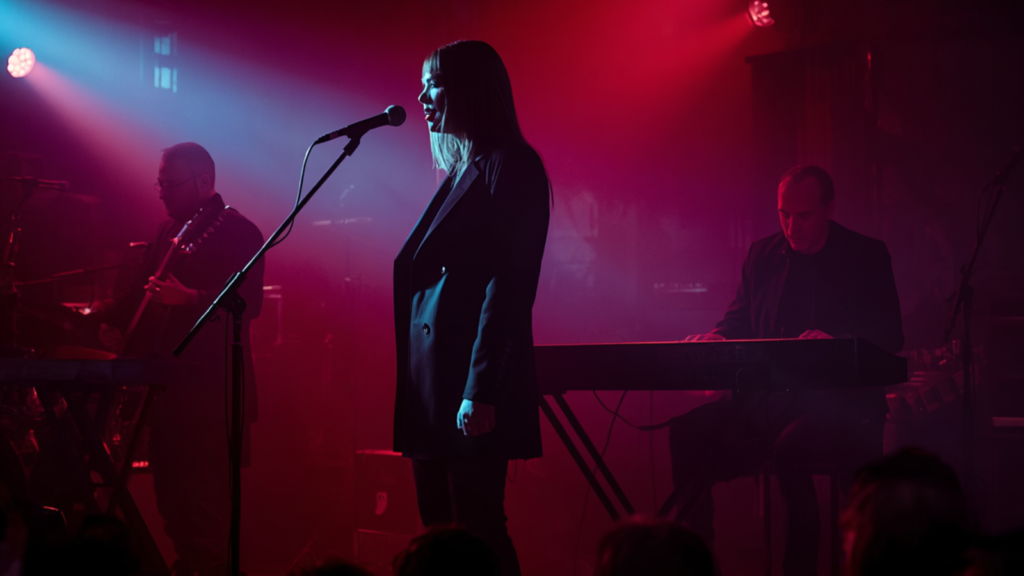
1. The post-punk pulse
This mood begins with movement. The bass often leads, the drums feel alert, and the guitar creates angles instead of comfort. There may be space between the instruments, but the space never feels peaceful. It feels charged.
Post-punk tension is ideal when you want darkness with momentum. It suits a solitary walk, a late train, or the moment before entering a crowded room. The song does not ask you to collapse into melancholy; it asks you to move through it.
Listen for: prominent bass, clipped guitar, urgent percussion, restrained vocals, and a sense that something is about to happen.
2. The darkwave glow
Darkwave keeps the emotional shadow but lets electronics illuminate it from within. Synthesizers create depth, programmed rhythms give the music a nocturnal pulse, and the voice may feel intimate, distant, or beautifully severe.
This is often the most accessible entrance into modern Gothic music because it can feel atmospheric and immediate at the same time. You can sit alone with it through headphones or hear it filling a dance floor after midnight. The darkness is present, but so is a controlled, unmistakable energy.
Listen for: shadowed synthesizers, electronic drums, deep vocals, repeating melodies, and emotional restraint.
3. The cold wave distance
Coldwave removes almost everything that feels unnecessary. The production may sound stark, dry, or deliberately detached. Drum machines repeat with little decoration. Synth lines feel architectural. Vocals can appear isolated inside the arrangement.
The effect is not emptiness for its own sake. It is emotional compression. Coldwave suggests rooms with bare walls, winter streets, fluorescent corridors, and thoughts that repeat long after the conversation has ended.
Listen for: minimal arrangements, mechanical repetition, icy synthesizers, muted emotion, and generous negative space.
4. The ethereal shadow
Not every dark sound needs hard edges. The ethereal mood uses layered voices, blurred guitar, reverb, and slow-moving harmonies to create a kind of suspended beauty. The words may be difficult to separate, but the emotional meaning remains clear.
This music feels less like entering a club and more like entering weather. It can be luminous without becoming cheerful and romantic without becoming sweet. Its darkness comes from scale, mystery, and the feeling that the song extends beyond what you can hear.
Listen for: floating vocals, softened percussion, shimmering guitar, long reverberation, and dreamlike layers.
5. The Gothic rock silhouette
Here, the architecture becomes larger. Drums expand, guitars become more dramatic, and the vocal performance may take on a sense of ceremony. Gothic rock can be romantic, theatrical, severe, or unexpectedly melodic—but its strongest examples maintain tension beneath the grandeur.
Important artists associated with the broader Gothic and post-punk lineage did not all sound alike. That variety matters. Even The Cure moved across stark minimalism, expansive melancholy, pop brightness, and darker atmospheric work rather than remaining inside one fixed sound.
Listen for: ringing guitar, commanding drums, expressive vocals, romantic scale, and melodies that feel both inviting and haunted.
6. The industrial pressure
Industrial music introduces friction. Rhythm can resemble machinery, metal, alarms, or systems pushed past their limits. The production may be abrasive, but repetition gives the sound discipline. What first appears chaotic is often carefully engineered.
This mood works when softness would feel dishonest. It channels frustration, control, urban anxiety, and physical power. At its most effective, industrial music does more than sound aggressive—it turns pressure into structure.
Listen for: metallic percussion, distorted electronics, commanding repetition, processed voices, and rhythms with physical weight.
7. The modern nocturnal hybrid
The most exciting contemporary dark music often refuses to remain in one category. Artists combine post-punk bass with club production, coldwave minimalism with pop melody, industrial texture with intimate vocals, or ethereal atmosphere with electronic rhythm.
This cross-pollination is not a dilution of Gothic music. It is evidence that the darker musical imagination remains alive. Scenes now connect across cities and countries with unusual speed, while independent platforms make it easier to discover artists outside traditional radio and major-label channels. Editorial collections such as Bandcamp Daily can provide a starting point for exploring those emerging regional and underground sounds.
Listen for: familiar dark elements rearranged in unexpected ways, especially combinations of guitar, synthesizer, electronic percussion, and emotionally direct vocals.
Build a listening ritual, not just a playlist
A playlist becomes more memorable when it has a purpose. Instead of collecting every song labeled Goth, decide what you want the music to do to the room.
- Begin with a temperature: cold, warm, electric, foggy, metallic, or candlelit.
- Choose a dominant movement: driving, swaying, floating, marching, or completely still.
- Limit the first playlist: ten to twelve songs are enough to establish a clear mood.
- Follow artists through labels and collaborators: this often reveals a scene more effectively than an algorithm.
- Keep one surprising track: contrast prevents a dark playlist from becoming emotionally flat.
Three routes beyond the mainstream
The midnight drive
Begin with post-punk motion, move into darkwave, and finish with a colder electronic track. Keep the rhythm consistent while gradually reducing the light.
The candlelit room
Choose ethereal voices, slow guitar, spacious arrangements, and songs that reveal themselves gradually. This path should feel intimate rather than theatrical.
The after-hours floor
Start with a strong darkwave pulse, increase the industrial pressure, and end with a modern hybrid that offers release without losing atmosphere.
Darkness should still contain contrast
The quickest way to make a Gothic playlist feel predictable is to confuse darkness with sameness. Seven songs with identical tempos, production, and emotional weight create less atmosphere—not more.
Let one track be fragile. Let another be physical. Allow romance to sit beside machinery and silence to sit beside rhythm. Contrast is what gives darkness its dimensions.
Marishka’s note: Do not ask whether a song looks Gothic. Ask what changes when it enters the room.
Your Gothic sound does not need permission
There is value in knowing musical history, but discovery should not become a test you are afraid to fail. Begin with the mood that feels most natural, then follow its connections outward. One bass line may lead toward post-punk. One synthesizer may lead toward coldwave. One voice may open the door to an entire independent scene.
Modern Gothic music survives because it continues to change shape. The goal is not to reproduce someone else’s approved canon. It is to listen closely enough to recognize the darkness that speaks in your own frequency.
[…] can also travel between art forms. The tension, romance, distance, and machinery found in modern Gothic music create many of the same emotional effects as a haunted literary […]
[…] because the music grew from several overlapping scenes rather than one neatly contained genre. Post-punk, gothic rock, deathrock, darkwave, coldwave, and ethereal music developed alongside one another, borrowed from […]