
15 Essential Gothic Rock Bands You Should Know
From Bauhaus’s haunting sound to The Sisters of Mercy’s deep, dark sweep, discover the artists who shaped gothic rock. Hear the songs worth playing first.
Gothic rock is more than dark clothing, dramatic makeup, and mysterious album covers. It’s a musical world built on airy guitars, hypnotic basslines, and haunting vocals. It explores beauty, melancholy, and the unknown.
Emerging from the late-1970s post-punk movement, gothic rock developed into one of alternative music’s most distinctive sounds. Its influence goes far beyond the original scene. It has shaped darkwave, alternative rock, industrial music, and many generations of artists. These artists are drawn to darker forms of expression.
But where should you begin?
Whether you are discovering goth music for the first time. Or coming back to the records that shaped the subculture. These 15 gothic rock bands take you through the genre’s history. They also show its sound and lasting appeal.
What Is Gothic Rock Music?
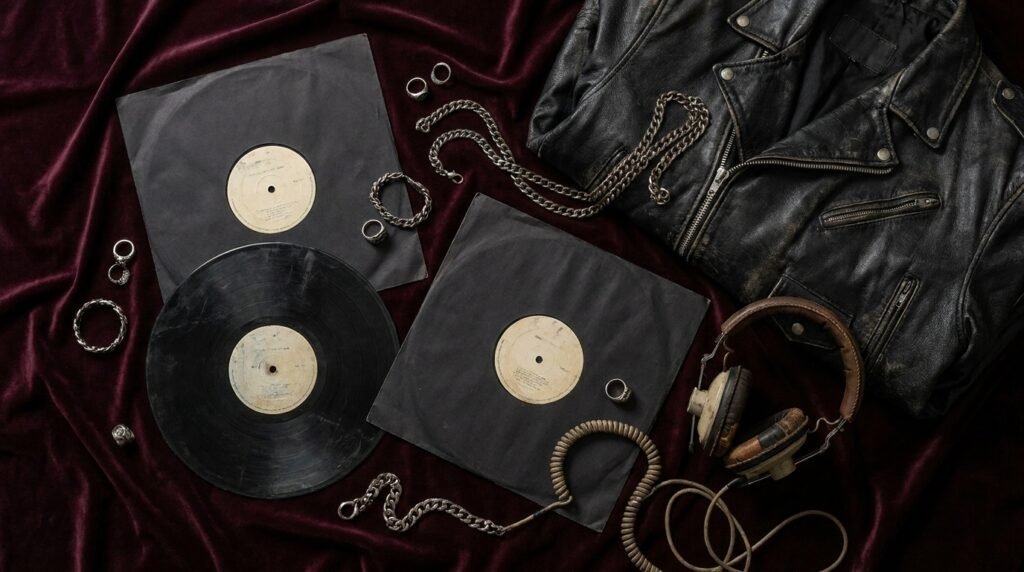
Gothic rock, often called goth rock, emerged from post-punk in the late 1970s and early 1980s. It grew mainly in the United Kingdom.
While punk emphasized urgency and rebellion, gothic rock often explored atmosphere, emotional intensity, and introspection. The music frequently featured prominent basslines, spacious guitar effects, deep or expressive vocals, and rhythms that could feel either hypnotic or explosive.
Its lyrics drew inspiration from romanticism, isolation, religion, literature, and the supernatural. Its visual identity developed alongside the music, with black clothing, dramatic hairstyles, theatrical makeup, and influences from Victorian fashion and horror cinema.
Bauhaus’s 1979 single “Bela Lugosi’s Dead” is widely recognized as a foundational gothic rock recording, although the genre developed through several overlapping post-punk scenes.
Not every band associated with goth sounds alike. Some emphasize shimmering guitars and emotional vulnerability; others favor mechanical rhythms, theatrical vocals, or heavier rock arrangements.
That diversity is part of what makes the genre so fascinating.
Want to explore the records behind the movement? Discover our guide to the 10 Essential Goth Albums That Shaped the Sound.
15 Essential Gothic Rock Bands You Should Know
1. Bauhaus — The Architects of Gothic Rock
Few bands are as closely associated with gothic rock’s beginnings as Bauhaus.
Formed in Northampton, England, in 1978, the group combined experimental post-punk, dub-influenced basslines, angular guitars, and Peter Murphy’s theatrical vocals.
Their breakthrough single, “Bela Lugosi’s Dead,” helped establish the atmosphere that would become synonymous with goth music: eerie, spacious, dramatic, and deliberately unconventional.
Yet Bauhaus were never limited to one sound. Their recordings moved between abrasive rock, experimental textures, and darkly glamorous theatricality.
Essential songs: “Bela Lugosi’s Dead,” “Dark Entries,” “She’s in Parties”
Start with: In the Flat Field (1980)
Why they matter: Bauhaus demonstrated that darkness could be an entire musical language rather than simply a lyrical theme.
2. The Cure — Melancholy, Romance, and Atmosphere
The Cure are among the most recognizable bands connected to gothic music, although their extensive catalog moves across post-punk, pop, alternative rock, and other styles.
Led by Robert Smith, the band became very influential in the goth scene. This was through albums like Faith, Pornography, and Disintegration.
Their darker recordings blend shimmering guitars, emotional vocals, and a longing that feels both intimate and vast.
The Cure also helped introduce elements of gothic style and sensibility to a much wider audience.
Essential songs: “A Forest,” “One Hundred Years,” “Pictures of You”
Start with: Disintegration (1989) for atmosphere, or Pornography (1982) for a harsher experience
Why they matter: The Cure showed how Gothic melancholy could coexist with melodic beauty and broad emotional appeal.
3. Siouxsie and the Banshees — Dark Post-Punk Innovation
Emerging from London’s punk scene, Siouxsie and the Banshees became a key band in gothic rock’s rise.
Siouxsie Sioux’s commanding vocals and visual presence helped establish a powerful alternative to conventional rock frontwomen.
Musically, the band experimented with striking percussion, inventive guitar arrangements, unsettling atmospheres, and vivid imagery.
Their album Juju remains particularly important for listeners exploring the connection between post-punk and gothic rock.
Essential songs: “Spellbound,” “Arabian Knights,” “Night Shift”
Start with: Juju (1981)
Why they matter: Their fearless experimentation helped shape the sound, attitude, and visual identity of goth culture.
4. The Sisters of Mercy — The Sound of Gothic Grandeur
If gothic rock has a signature combination of deep vocals, driving bass, dramatic guitars, and relentless drum-machine rhythms, The Sisters of Mercy helped define it.
Formed in Leeds in 1980, the band developed a strong sound. It was built around Andrew Eldritch’s baritone and a drum machine called Doktor Avalanche.
Their music could be icy and minimal or sweeping and monumental.
Albums such as First and Last and Always and Floodland became central reference points for later gothic rock artists.
Essential songs: “Lucretia My Reflection,” “Temple of Love,” “This Corrosion”
Start with: Floodland (1987)
Why they matter: The Sisters of Mercy established one of gothic rock’s most influential musical blueprints.
5. Fields of the Nephilim — Mysticism and Dark Western Atmosphere
Fields of the Nephilim brought an unusual visual and musical identity to gothic rock.
With dusty coats and wide-brimmed hats, the band created a world unlike many others.
Their style recalled supernatural Westerns.
Their music combines atmospheric guitars, heavy rhythms, Carl McCoy’s growling vocals, and mystical imagery.
The result feels cinematic, ritualistic, and often immense.
Essential songs: “Moonchild,” “Preacher Man,” “For Her Light”
Start with: The Nephilim (1988)
Why they matter: They expanded gothic rock’s possibilities by combining dark romanticism with psychedelic and heavier rock influences.
6. Christian Death — The American Deathrock Connection
While gothic rock developed prominently in Britain, American underground scenes were creating their own darker musical identities.
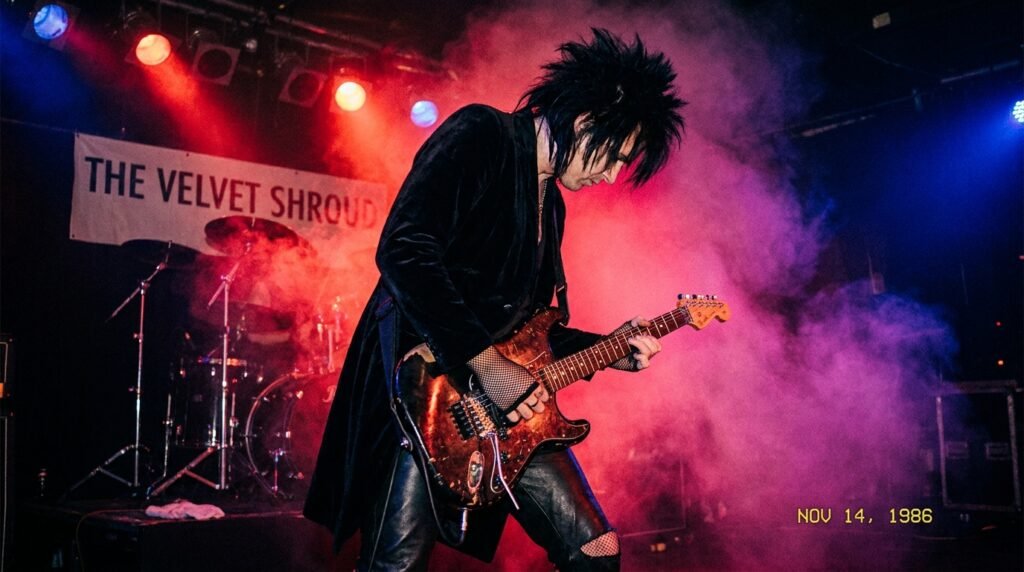
Christian Death, founded in Los Angeles, became one of the most significant names associated with deathrock.
Their early recordings combined punk intensity, unsettling guitar textures, provocative imagery, and theatrical performance.
The band’s debut album, Only Theatre of Pain, remains a defining release within the American deathrock tradition.
Essential songs: “Romeo’s Distress,” “Spiritual Cramp,” “Deathwish”
Start with: Only Theatre of Pain (1982)
Why they matter: Christian Death helped establish a distinctly American branch of dark alternative music.
7. The Mission — Romantic and Anthemic Gothic Rock
Founded in 1985 by former Sisters of Mercy members Wayne Hussey and Craig Adams, The Mission formed. They took a more romantic approach to gothic rock. Their sound was also broader and more varied.
Their sound features sweeping guitars, passionate vocals, memorable melodies, and dramatic arrangements.
Where some goth bands favored icy restraint, The Mission often embraced emotional grandeur.
Essential songs: “Wasteland,” “Severina,” “Tower of Strength”
Start with: God’s Own Medicine (1986)
Why they matter: The Mission brought a melodic, arena-sized sound to gothic rock. They kept its darker atmosphere.
8. Alien Sex Fiend — Experimental Gothic Chaos
Not all gothic music is solemn or romantic.
Alien Sex Fiend embraced the stranger, more chaotic side of the early goth scene. They mixed electronic experiments, rough vocals, punk energy, and dark humor.
Their music can feel abrasive, playful, surreal, and unsettling—all within the same recording.
Essential songs: “Ignore the Machine,” “Now I’m Feeling Zombiefied,” “E.S.T. (Trip to the Moon)”
Start with: Who’s Been Sleeping in My Brain? (1983)
Why they matter: Alien Sex Fiend demonstrated how experimental and eccentric the gothic underground could become.
9. Xmal Deutschland — German Post-Punk Darkness
Germany’s Xmal Deutschland brought an intense, atmospheric perspective to the wider gothic and post-punk landscape.
Fronted by Anja Huwe, the band combined urgent rhythms, atmospheric guitars, and emotionally charged vocals.
Their recordings feel mysterious and powerful, even when listeners don’t understand every lyric.
Essential songs: “Incubus Succubus II,” “Mondlicht,” “Qual”
Start with: Fetisch (1983)
Why they matter: Xmal Deutschland helped make gothic post-punk an international movement. It was not only a British phenomenon.
10. The March Violets — Gothic Dancefloor Energy
Emerging from Leeds in the early 1980s, The March Violets became a key part of the early British goth scene.
Their sound blended driving rhythms, distinctive vocal interplay, post-punk guitars, and darkly infectious hooks.
Their recordings are particularly appealing to listeners who enjoy the danceable side of early gothic rock.
Essential songs: “Snake Dance,” “Walk Into the Sun,” “Crow Baby”
Start with: Natural History (1984 compilation)
Why they matter: The March Violets capture the energetic club culture that helped gothic music become a living scene.
11. Red Lorry Yellow Lorry — Minimalism and Menace
Red Lorry Yellow Lorry developed a stark, driving sound. It was built around repetitive rhythms, sharp guitars, and Chris Reed’s deep vocals.
Their music often feels stripped down compared with the more theatrical side of gothic rock.
That restraint makes the atmosphere even more intense.
Essential songs: “Talk About the Weather,” “Walking on Your Hands,” “Hollow Eyes”
Start with: Talk About the Weather (1985)
Why they matter: They represent gothic rock’s rawer, more minimal post-punk roots.
12. Love and Rockets — Gothic Roots, Wider Horizons
Formed by former Bauhaus members Daniel Ash, David J, and Kevin Haskins, Love and Rockets took elements of their earlier band’s experimental spirit in new directions.
Their music incorporates psychedelic rock, alternative rock, acoustic textures, and dark pop sensibilities.
They aren’t exclusively a gothic rock band, but their place in the genre’s wider family tree is significant.
Essential songs: “Ball of Confusion,” “No New Tale to Tell,” “So Alive”
Start with: Express (1986)
Why they matter: Love and Rockets show how musicians from gothic rock’s foundational era helped shape broader alternative music.
13. The Wake — American Gothic Rock’s Underground Legacy
Not to be confused with other groups with the same name. The Wake is from Columbus, Ohio. They developed a sound linked to the American gothic rock underground.
Their music blends airy guitar lines, strong bass, and moody vocals. It draws on the genre’s classic roots while forming a distinct identity.
Essential songs: “Christine,” “Sideshow,” “Nazarene”
Start with: Masked (1993)
Why they matter: The Wake helped carry traditional gothic rock into the 1990s American underground.
14. She Past Away — A Modern Darkwave Revival
Turkish duo She Past Away are best described as darkwave and post-punk, not traditional guitar-led gothic rock.
Nevertheless, their music connects directly to the atmospheric legacy of the original goth movement.
Minimalist guitar lines, pulsing electronic rhythms, and hypnotic vocals give their songs an immediately recognizable identity.
Essential songs: “Kasvetli Kutlama,” “Ritüel,” “Durdu Dünya”
Start with: Belirdi Gece (2012)
Why they matter: She Past Away demonstrate how gothic musical traditions continue to evolve through contemporary darkwave.
15. Twin Tribes — A New Generation of Gothic Atmosphere
American duo Twin Tribes represent another important connection between classic goth influences and contemporary darkwave.
Their sound emphasizes melodic synthesizers, atmospheric guitars, steady electronic rhythms, and introspective vocals.
While they fit best in the modern darkwave scene, their music offers an easy entry point.
It is a good start for listeners who want to explore gothic music today.
Essential songs: “Shadows,” “Fantasmas,” “Monolith”
Start with: Shadows (2018)
Why they matter: Twin Tribes help introduce younger audiences to the enduring appeal of dark, atmospheric alternative music.
Gothic Rock vs. Darkwave vs. Deathrock: What’s the Difference?
These styles share history, audiences, and aesthetic influences, but they aren’t interchangeable.
Gothic rock typically emphasizes guitar-driven post-punk, prominent basslines, atmospheric production, and emotionally expressive vocals. Bauhaus, The Sisters of Mercy, and Fields of the Nephilim are important reference points.
Darkwave generally places greater emphasis on synthesizers, electronic textures, and moody atmospheres. Artists such as She Past Away and Twin Tribes illustrate contemporary versions of this sound.
Deathrock grew from punk-rooted underground scenes, particularly in the United States. It often features sharper, more frantic guitars, theatrical vocals, and horror-influenced imagery. Christian Death is a key example.
The boundaries frequently overlap. Many artists move between styles, and genre labels can be debated by musicians and fans alike.
Where Should Beginners Start With Gothic Rock?
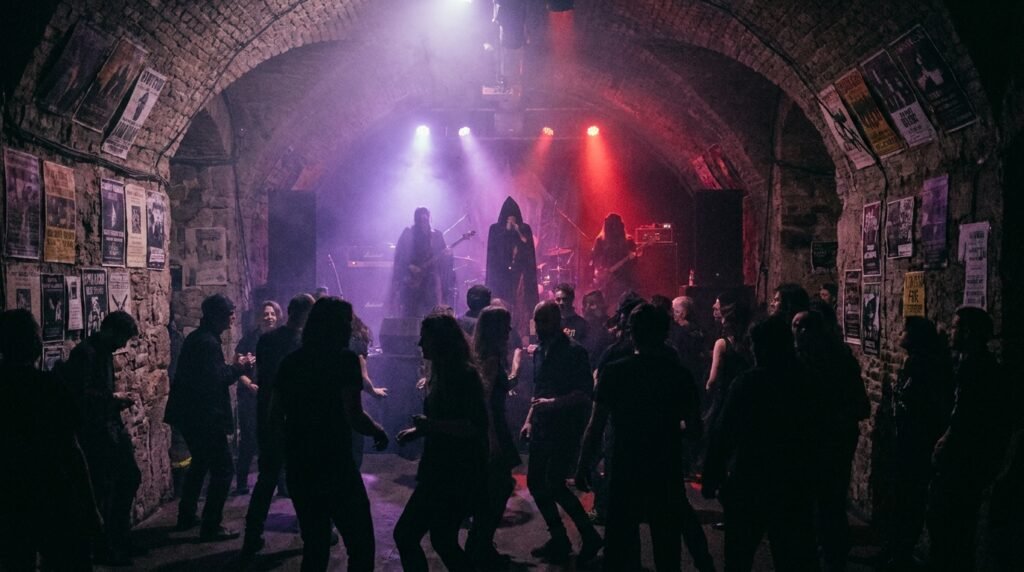
If you’re new to gothic rock bands, you don’t need to explore decades of music at once.
Start with a few songs that reveal the genre’s different personalities.
| If you enjoy… | Try this band | Start with |
|---|---|---|
| Dark, theatrical experimentation | Bauhaus | “Bela Lugosi’s Dead” |
| Romantic melancholy | The Cure | “Pictures of You” |
| Powerful post-punk energy | Siouxsie and the Banshees | “Spellbound” |
| Deep vocals and driving rhythms | The Sisters of Mercy | “Lucretia My Reflection” |
| Heavy, mystical atmosphere | Fields of the Nephilim | “Moonchild” |
| Modern electronic darkness | She Past Away | “Ritüel” |
Once you’ve found a sound you enjoy, listen to a complete album. Gothic rock is often particularly rewarding in album form, where mood and atmosphere have room to develop.
How Gothic Rock Influenced Fashion and Culture
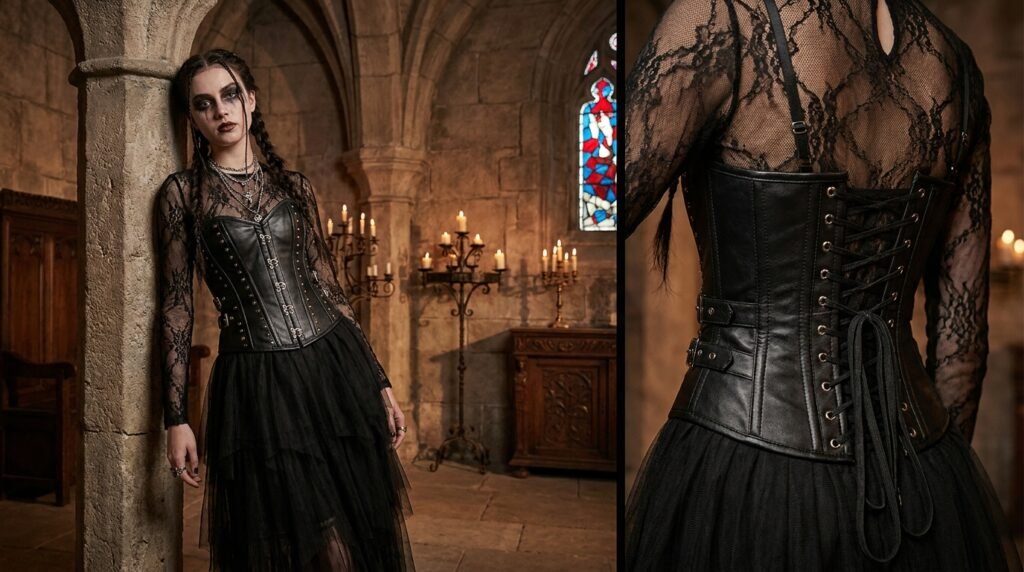
Gothic rock did more than establish a musical style. It helped shape a recognizable subculture with its own visual language.
Black clothing became common in many goth styles. Bold eyeliner did too. People often wore teased hair, leather, and lace. Silver jewelry and Victorian-inspired details were also part of the look.
Yet Gothic fashion has never been entirely uniform.
Some fans draw inspiration from post-punk minimalism. Others prefer romantic velvet, ornate jewelry, or elaborate historical influences.
The link between music and personal style stays central to goth culture because both help explore identity and creativity.
For more ideas, check out American Gothic Times’ Modern Gothic Capsule Wardrobe.
You can also read 21 Best Gothic Clothing Brands in 2026: Affordable, Indie & Luxury.
For more ideas, check out American Gothic Times’ Modern Gothic Capsule Wardrobe.
Are Gothic Rock Bands Still Relevant Today?
Absolutely.
Although the original gothic rock movement developed decades ago, its musical vocabulary remains influential.
Contemporary artists continue to explore atmospheric guitars, dark electronic production, melancholic melodies, and themes of identity, longing, and transformation.
Modern darkwave, post-punk revival, and gothic rock scenes also gain support from online music communities. They also benefit from independent labels, streaming platforms, and live events.
For newcomers, that means gothic music isn’t simply a historical genre to study. It’s an evolving creative culture to experience.
Curious about how the darker side of music continues to evolve? Explore our feature on Modern Gothic Music.
Frequently Asked Questions About Gothic Rock Bands
What are the most famous gothic rock bands?
Bauhaus, The Cure, Siouxsie and the Banshees, The Sisters of Mercy, and Fields of the Nephilim are well-known artists in gothic rock.
Who started gothic rock?
No single band created the genre alone. Gothic rock came from late-1970s post-punk. Bauhaus’s 1979 single “Bela Lugosi’s Dead” is often cited as a key early track.
Is The Cure a gothic rock band?
The Cure are strongly associated with gothic rock through influential darker albums such as Faith, Pornography, and Disintegration. However, their wider catalog spans several genres, including post-punk, pop, and alternative rock.
What’s the difference between goth rock and heavy metal?
Gothic rock developed primarily from post-punk and tends to emphasize atmospheric guitars, basslines, mood, and introspection. Heavy metal has different musical roots and often emphasizes heavier riffs and guitar-driven intensity. Some bands combine elements of both.
What are some modern bands influenced by gothic rock?
She Past Away and Twin Tribes are popular modern darkwave artists. They are influenced by the wider goth and post-punk tradition. Their music is not identical to classic gothic rock, but it shares important stylistic connections.
What is the best gothic rock album for beginners?
Disintegration by The Cure is an accessible introduction to Gothic atmosphere. For a more direct introduction to classic gothic rock, try In the Flat Field by Bauhaus.
You can also try Floodland by The Sisters of Mercy.
Final Thoughts: The Enduring Appeal of Gothic Rock
The greatest gothic rock bands created more than a recognizable sound. They built musical worlds where melancholy could feel beautiful, darkness could become expressive, and individuality could thrive.
From Bauhaus’s early experiments to modern darkwave’s moody new sounds, gothic music continues to inspire listeners. Many find meaning in its deep emotion and artistic freedom.
Start with one song, follow the atmosphere that speaks to you, and explore from there.
At American Gothic Times, we believe dark culture is worth discovering, understanding, and celebrating.
Dark Culture, Documented.