
Gothic literature endures because its darkness is never merely decorative. Behind every ruined house, forbidden room, family secret, and unsettling double is a fear readers recognize: the past may return, identity may fracture, and the safest place may conceal the greatest danger.
The genre has changed dramatically since Horace Walpole’s The Castle of Otranto, published in 1764 and widely regarded as the first Gothic novel. Castles have become suburban homes, laboratories have become technology companies, and ancestral curses have become inherited trauma. Yet the emotional architecture remains remarkably familiar.
These seven themes explain why Gothic stories still feel alive—and why they continue to shape contemporary fiction, film, fashion, music, and art.
Why Gothic literature never stays buried
Gothic literature lives at the boundary between attraction and fear. It invites us into beautiful spaces, then makes us question what that beauty conceals. It gives us charismatic strangers, elegant houses, storm-darkened landscapes, and objects charged with history.
The supernatural may appear, but it does not have to. A Gothic story can be entirely psychological. What matters is uncertainty: the feeling that something has been hidden, suppressed, or left unresolved.
The Gothic test: If the past changes the emotional temperature of the present, the story has entered Gothic territory.
1. The past refuses to remain past
In Gothic stories, history is active. An old betrayal, concealed crime, broken promise, or inherited injustice presses against the present until someone is forced to confront it.
The haunting may be literal—a ghost walking through a corridor—or symbolic. A family name, locked letter, damaged portrait, or inherited property can carry the same pressure. The characters may try to begin again, but the story insists that reinvention without reckoning is fragile.
This is why ruins appear so often. They are not simply picturesque backgrounds. They show that time has passed without resolving what happened there.
Modern Gothic fiction often replaces the ancestral curse with generational trauma, institutional silence, or a carefully edited family history. The language changes, but the question remains: What do we inherit from people who came before us?
2. The house has a memory
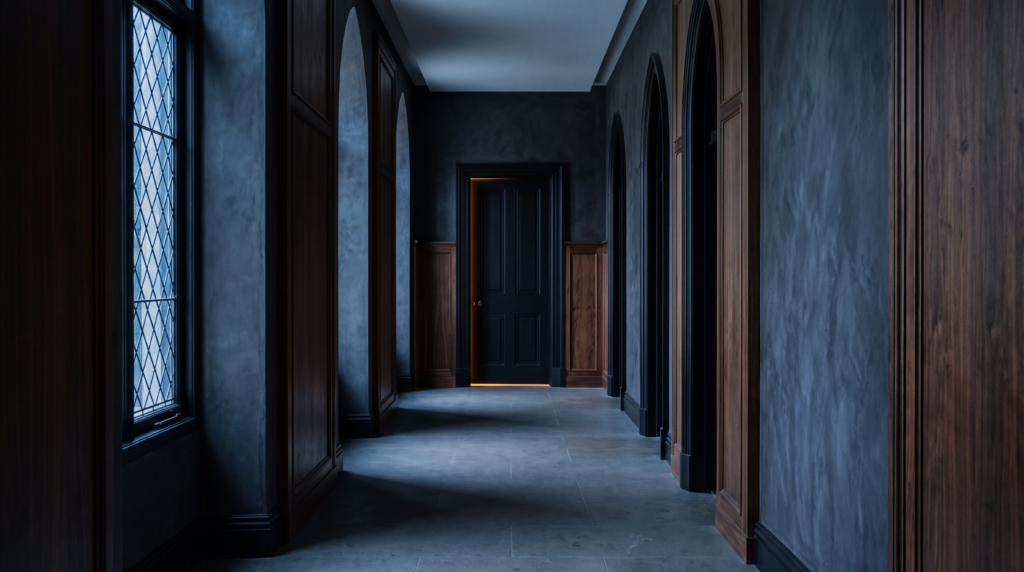
Few genres understand architecture as intimately as Gothic literature. The building is rarely neutral. It watches, confines, conceals, and sometimes seems to react.
A corridor delays arrival. A staircase creates uncertainty. A locked room turns absence into obsession. Windows promise escape while emphasizing the distance between inside and outside.
This connection between emotion and space also appears in modern Gothic architecture, where height, shadow, thresholds, and material weight shape how a room feels. In fiction, those same elements become psychological instruments.
Shirley Jackson’s The Haunting of Hill House demonstrates how a building can feel both physically present and emotionally unstable. The reader is never allowed to separate the condition of the house completely from the condition of the people inside it.
A Gothic house does not need turrets or crumbling stone. It can be a pristine apartment, isolated hotel, family estate, hospital, school, or ordinary home with one door nobody opens.
3. Forbidden knowledge carries a price
Someone always wants to know what should remain hidden.
The forbidden object may be a manuscript, scientific experiment, private diary, sealed room, family record, or secret ritual. Curiosity moves the story forward, but discovery rarely brings uncomplicated freedom.
In Mary Shelley’s Frankenstein, published in 1818, Victor Frankenstein’s pursuit of knowledge cannot be separated from his refusal to accept responsibility for what he creates. The horror does not come only from the experiment. It comes from ambition without care.
This theme feels especially modern. Contemporary stories apply it to artificial intelligence, surveillance, biotechnology, online identity, and systems capable of growing beyond their creators’ control.
Gothic literature does not argue that knowledge itself is evil. It asks a sharper question: What happens when the desire to create becomes stronger than the willingness to care for the creation?
4. Desire and danger share a doorway
The Gothic has always understood that fear and attraction can occupy the same room.
Its villains are often compelling. Its dangerous places are beautiful. Its supernatural figures may inspire longing as easily as terror. This tension gives the genre its emotional electricity.
In Dracula, the vampire represents invasion and death, but also charisma, appetite, and forbidden freedom. In Wuthering Heights, passion becomes inseparable from cruelty, memory, landscape, and self-destruction.
Modern Gothic romance continues this tradition, but the most interesting versions do not mistake control for love. They examine why danger can appear glamorous, how isolation changes judgment, and what a character is willing to surrender in exchange for intensity.
The result is not an ordinary romance with darker clothes. It is a study of desire under pressure.
5. The self becomes unfamiliar
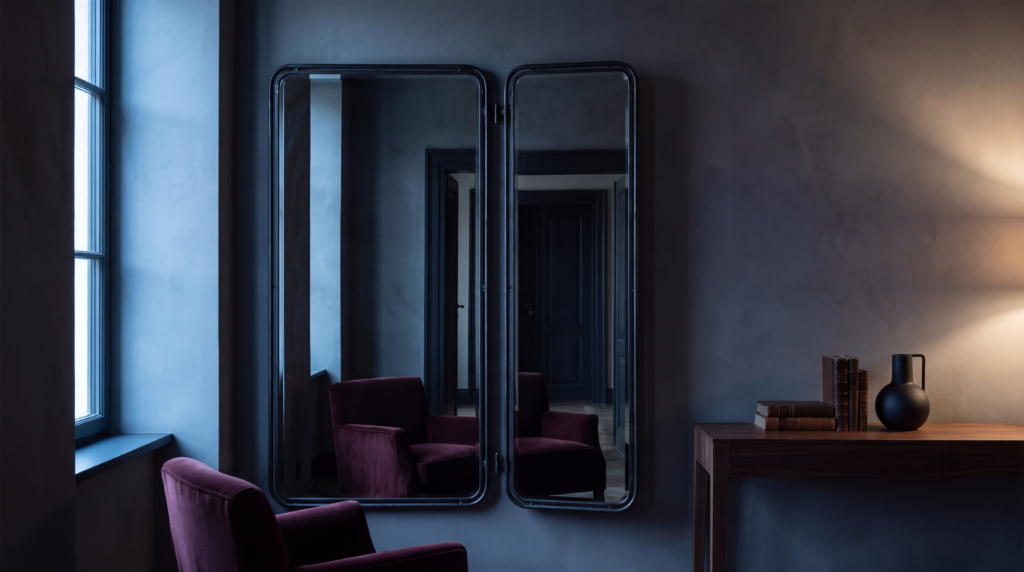
Mirrors, doubles, portraits, masks, hidden identities, and divided personalities appear repeatedly in Gothic fiction because the genre distrusts the idea of a stable self.
Robert Louis Stevenson’s Strange Case of Dr Jekyll and Mr Hyde makes that division visible, but many Gothic characters experience it more quietly. They doubt their memories, suppress parts of themselves, perform respectability, or fear that someone else can see what they have tried to conceal.
The double is disturbing because it is rarely a complete stranger. It is a rejected possibility—the life not lived, the impulse denied, or the identity society refuses to permit.
This theme has found a natural home in modern stories about avatars, curated online personas, celebrity, beauty, and reputation. The mirror is now a screen, but the old fear remains: What if the image becomes more powerful than the person?
6. Confinement exposes power
Gothic literature is filled with people who cannot leave.
Sometimes the barrier is physical: a locked bedroom, remote estate, institution, underground passage, or snowbound landscape. Sometimes it is social or psychological: money, marriage, illness, reputation, obligation, or fear.
Charlotte Perkins Gilman’s The Yellow Wallpaper turns a domestic room into a system of control. The narrator’s perceptions are dismissed while the space around her becomes increasingly oppressive. Whether readers interpret every detail literally matters less than the central experience of being trapped and unheard.
Confinement reveals who holds authority. Who owns the house? Who controls the keys? Whose version of reality is believed? Who is allowed to speak, travel, inherit, create, or refuse?
The Gothic room is therefore political as well as atmospheric. Its walls show how power operates.
7. The monster asks who created it
The most memorable Gothic monsters rarely remain simple symbols of evil. They reflect the people and societies that produced them.
Frankenstein’s creature becomes terrifying, but he also experiences abandonment, isolation, and rejection. His existence forces the reader to examine Victor’s choices rather than placing every moral burden on the being he made.
Vampires can represent appetite, contagion, seduction, aristocratic decay, or fear of outsiders. Ghosts may embody grief or historical injustice. Shapeshifters and doubles expose the instability beneath respectable appearances.
The question is not only, “How do we destroy the monster?” It is also, “What conditions made the monster possible?”
That question keeps Gothic literature culturally useful. It turns horror into an examination of responsibility.
How do these themes survive in modern storytelling
Contemporary Gothic stories do not need to reproduce Victorian plots. The genre survives through emotional structure rather than costume.
A modern Gothic story might unfold in:
- A luxury home controlled by hidden technology
- A declining industrial town that refuses to discuss its past
- A wellness retreat where guests surrender their independence
- A family archive containing contradictory histories
- An online identity that begins replacing its creator
- A perfect relationship built upon surveillance and control
- A beautiful institution designed to keep people silent
The atmosphere can also travel between art forms. The tension, romance, distance, and machinery found in modern Gothic music create many of the same emotional effects as a haunted literary setting.
A simple path into Gothic literature
Readers new to the genre do not need to begin with a strict historical syllabus. Start with the kind of darkness that interests you.
- For origins: The Castle of Otranto by Horace Walpole
- For creation and responsibility: Frankenstein by Mary Shelley
- For obsession and landscape: Wuthering Heights by Emily Brontë
- For the divided self: Strange Case of Dr Jekyll and Mr Hyde by Robert Louis Stevenson
- For desire and invasion: Dracula by Bram Stoker
- For psychological confinement: The Yellow Wallpaper by Charlotte Perkins Gilman
- For the haunted house: The Haunting of Hill House by Shirley Jackson
Read for mood as much as plot. Notice the doors, distances, silences, objects, and withheld information. Gothic stories often reveal themselves through what a room prevents a character from seeing.
The darkness is never only decoration
Gothic literature remains powerful because it gives form to difficult truths. A haunting becomes memory. A monster becomes a responsibility. A locked room becomes control. A ruined house becomes history that has not been honestly faced.
The genre may be romantic, frightening, extravagant, or restrained, but its strongest stories always contain contrast. Beauty stands beside corruption. Desire stands beside danger. The familiar becomes strange.
That is why the Gothic never truly disappears. It changes its address, updates its clothing, and waits behind a different door.
[…] useful for weddings, formal events, performances, or anyone building a wardrobe around classic Victorian Gothic influences rather than modern streetwear. It also offers both men’s and women’s clothing, which gives it […]